

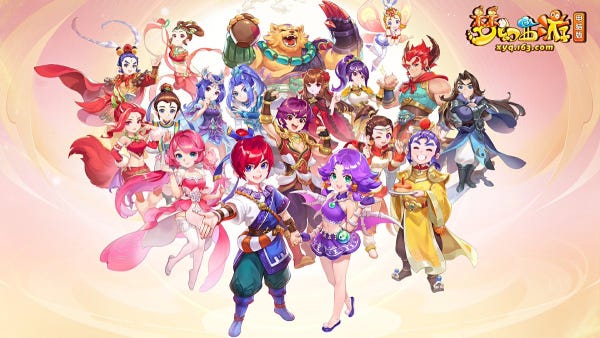
The National Press and Publication Administration (NPPA), mainland China’s regulator in charge of game approvals, issued ISBNs for 193 domestic games and 4 import games on July 23, 2026. This is the sixth batch of games approved in 2026 and takes total approvals to 1,110 domestic games and 37 import games. The domestic batch included 175 mobile games and 18 cross platform games, while the import games list included 3 mobile games and 1 cross platform games. New games from NetEase, Shengqu, Bilibili, 37 Interactive, and Shengtian among others were approved. A total of 8 games were included on the updated ISBN list where publishers can request a name change, publisher change, or additional platform for an existing ISBN.
Notable titles approved include a new Fantasy Westward Journey mobile game from NetEase, Aion Classic from Shengqu and NCsoft, and Phantom Blade Zero from S-Game. We expect over 2,000 domestic and import games to be approved this year.
Link to original article (Chinese) →
Capcom says remakes help fund new games and IP
Capcom says its strategy of remaking classic Resident Evil titles is providing both financial and creative benefits, helping fund new game development while allowing development teams to refine their technical expertise. Over the past decade, Capcom has released three major Resident Evil remakes, most recently Resident Evil 4 in 2023. The next remake, Resident Evil Code: Veronica, is scheduled for release in 2027. The sustained success of the remake strategy has coincided with strong performance from new releases.
Why this matters: Thanks to this strategy, Resident Evil Requiem has become the fastest selling new entry in the franchise, while Capcom’s new IP Pragmata has sold 2.51 million units worldwide within three months of launch. Following the company’s latest financial results, Capcom corporate officer Yoshikazu Shimauchi also indicated that the likelihood of a Pragmata sequel is high. Rather than treating remakes as standalone products, the company is using them to strengthen development capabilities, sustain player engagement with its flagship franchises, and diversify future releases.
Vietnam proposes reducing daily gaming time limit for children under 16 to one hour
Vietnam has proposed amendments to Decree 147/2024 that would reduce the daily gaming limit for children under 16 from 180 minutes to 60 minutes, while requiring operators to verify user ages and register under-16 accounts through a parent or legal guardian. The draft also proposes stricter health warning requirements, more standardized warning displays, age rating measures, and incentives for locally developed educational and culturally themed games. Industry stakeholders, including VNGGames, have provided feedback during the public consultation process, and the draft remains subject to revision before adoption. Pilot licensing programs and tax incentives for qualifying Vietnamese games are also being considered as part of the proposal.
Why it matters: The draft combines stricter youth protections with proposed support measures for domestic game development, suggesting Vietnam may be seeking a more balanced regulatory approach to the sector. The proposal follows in the footsteps of broader regional proposals concerning youth gamers in regard to addiction, safety, and content. If adopted, publishers and developers will need to manage additional compliance requirements while evaluating opportunities tied to locally developed educational and culturally themed content.
Link to original article (Vietnamese) →
Saudi PIF’s $55 billion acquisition of EA Games approved by EU antitrust commission
Electronic Arts $55 billion deal to be acquired by a consortium led by Saudi’s Public Investment Fund (PIF) has passed another hurdle, as the EU antitrust commission has approved the merger, finding that it would not raise any competition concerns. The EU will also be reviewing the deal under its Foreign Subsidies Regulation (FSR), but the deal is expected to gain approval through that lens as well with the Commission’s decision due by July 30. With the Jared Kushner-led Affinity Partners being a part of the consortium, it is unlikely that EA’s buyout will have any more meaningful hurdles on its path to completion.
Why this matters: The approvals for the deal are certainly a lot smoother than when Microsoft acquired Activision Blizzard, which led to an in-depth investigation before it could proceed. However, we do note that there has been pushback to the deal from game developers and US lawmakers who have called on the FTC to scrutinize the takeover.
Tencent brings Esports World Cup 2026 festival to Wuhan
Tencent Esports hosted the Esports World Cup (EWC) 2026 China Super Esports Carnival in Wuhan on July 18 and 19, attracting more than 100,000 visitors across the two-day event with over 24,000 visits to interactive gaming experiences. Organized as part of Tencent’s partnership with the EWC, the festival was designed to bring the atmosphere of the international tournament to Chinese fans through community focused offline experiences. The event featured experiences across interactive zones, with dedicated exhibition areas for seven popular games, including Peacekeeper Elite and Teamfight Tactics.
Why this matters: Tencent described the initiative as part of its strategy to connect China’s player community with the Esports World Cup by complementing tournament broadcasts with localized fan experiences. Following previous events in Changsha and Wuhan, additional EWC 2026 viewing parties are planned for Nanjing. Rather than relying solely on online viewership, publishers and tournament operators are creating localized experiences that strengthen player communities, expand sponsorship opportunities, and extend the commercial impact of global esports events into regional markets.
Link to original article (Chinese) →
Sega opens another store in China
Sega has opened a new flagship store in Beijing, marking its second permanent retail location in mainland China following the launch of its Shanghai store. The company also plans to open a temporary pop up store in Shenzhen later this month, continuing its expansion of direct to consumer retail operations in the country. The Beijing store features merchandise from several of Sega’s major franchises, including Sonic the Hedgehog, Like a Dragon, Persona, Metaphor: ReFantazio, and Hatsune Miku: Colorful Stage!, alongside Beijing exclusive products.
Why this matters: Sega is positioning the store as both a retail destination and an interactive brand experience with dedicated game demo areas where visitors can play various games. Sega’s expansion reflects a broader trend among Japanese publishers investing more heavily in physical brand experiences in China. Earlier in 2026, Square Enix opened its first official flagship experience and merchandise store in Shanghai, highlighting growing confidence in the country’s demand for premium game related merchandise and entertainment experiences.
Niko delivers the ‘why-behind-the-what’ that AI tools cannot.
Garena reveals Free Fire Daybreak anime
Garena has partnered with Japanese firm Kadokawa to create an anime adaptation of its mobile game, Garena Free Fire, that has officially been titled Free Fire Daybreak. The series will be co-produced through a joint investment by the two companies and is set to release globally in Spring 2027. Set in the futuristic metropolis of New Dawn, Free Fire Daybreak follows protagonist Kelly, who awakens with no memory of her past before becoming entangled in Horizon Corporation’s mysterious Project Bloom.
Why this matters: Free Fire has become one of the most popular video games in the world with Garena reporting 666 million quarterly active players across its games and 72 million quarterly paying users. The anime follows the transmedia strategy that has been increasingly adopted by game franchises owners, with the aim to bring in new fans and increase engagement across the IP. There have also been a number of transmedia crossover projects within games like Free Fire including music concerts and film premieres.
Tencent to shut down Final Fantasy XIV Mobile in China
Tencent’s LightSpeed Studios will shut down the Chinese version of Final Fantasy XIV Mobile at the end of September 2026 and has cancelled the game’s planned global launch. The title launched in mainland China on June 19, 2025, resulting in a total operating lifespan of 468 days. The project originated in 2019 through a partnership between Tencent and Square Enix, with Final Fantasy XIV producer Naoki Yoshida overseeing the adaptation. While the game peaked at #35 on China’s iOS game revenue chart during its launch period, it entered a steady decline in the following month.
Why this matters: While there are multiple reasons why the game failed, the main issue as we see it was the mismatch between traditional PC MMORPG design and mobile players’ preference for shorter play sessions, high content maintenance costs, and dissatisfaction among core MMORPG players with mobile monetization and update cadence. In essence, the game tried to recreate the PC gaming experience and monetization while failing to transition those players to mobile or reach the broader MMORPG player base on mobile.
Huya starts experimenting with digital human AI models
Huya has launched VAM 1.0, its real time multimodal digital human AI platform, expanding the use of generative AI across livestreaming, audience engagement, and interactive entertainment. The technology has already been deployed across several core features on Huya’s platform. These include AI generated singing and dancing performances with seamless outfit changes, AI powered interactive experiences such as Werewolf / Mafia style games, digital assistants that help streamers respond to viewer comments and manage audience interactions, and 24 hour automated promotion of in game items and other commercial content.
Why this matters: Huya believes its investment in digital humans can increasingly support continuous broadcasts, live event commentary, and companion style entertainment while reducing the operational costs associated with creator led content production. Huya has been losing market share to short video platforms over the past few years, with revenue dropping notably. The bet on generative AI is a risky one, but could significantly increase content output while lowering production costs, creating new monetization opportunities for livestreaming platforms, game publishers, and creators.
Events
ChinaJoy
July 31-August 3, 2026
Shanghai, China
Attendee: Xiaofeng Zeng