

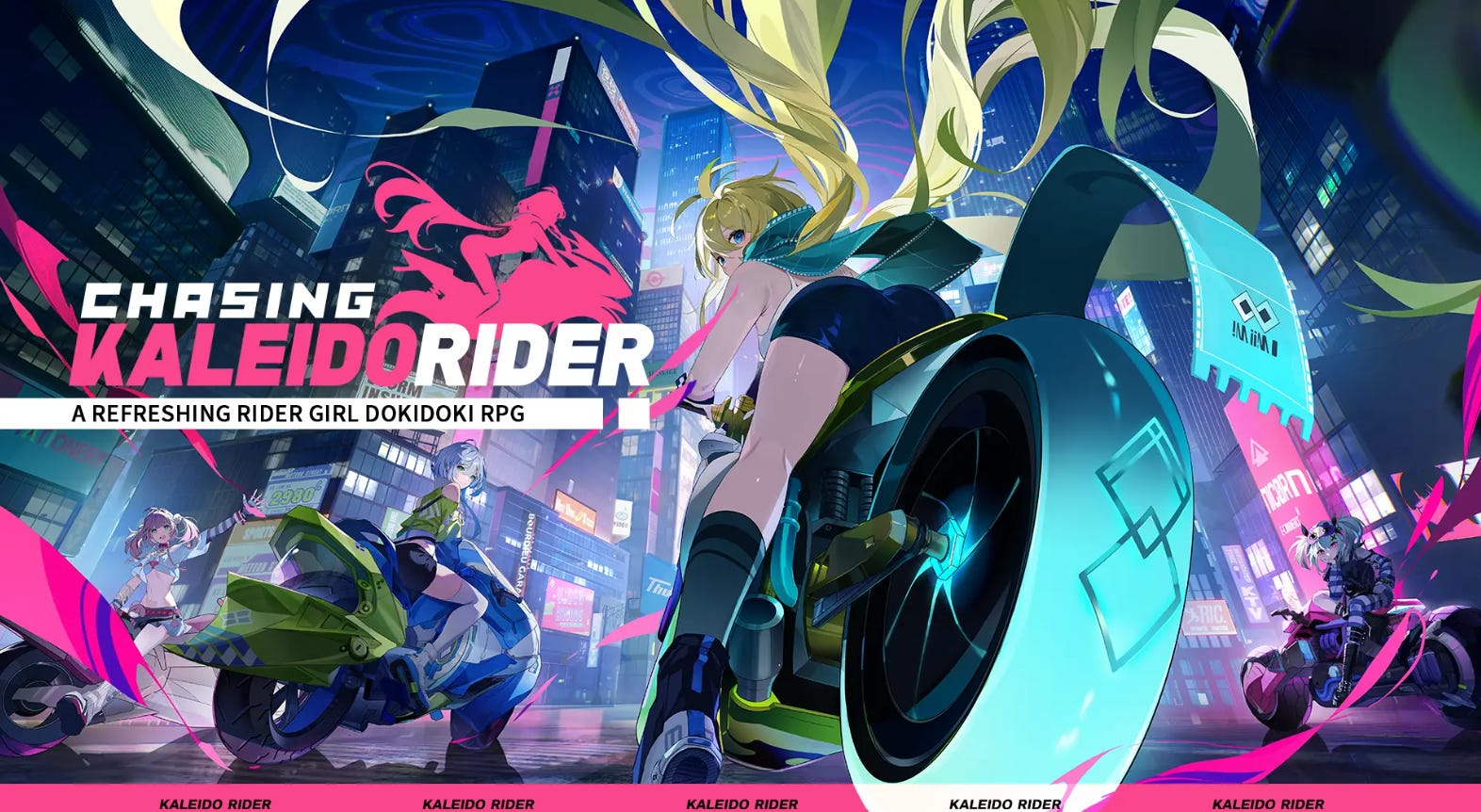
The National Press and Publication Administration (NPPA), mainland China’s regulator in charge of game approvals, issued ISBNs for 154 domestic games and 4 import games on May 26, 2026. This is the fourth batch of games approved in 2026 and takes total approvals to 754 domestic games and 25 import games The domestic batch included 135 mobile games, 2 PC games and 17 cross platform games, while the import games list included 2 mobile games and 2 cross platform games. New games from Tencent, NetEase, 37 Interactive, Lilith Games, ByteDance and 4399 among others were approved. A total of 9 games were included on the updated ISBN list where publishers can request a name change, publisher change, or additional platform for an existing ISBN.
Why this matters: Niko Partners has seen a steady increase in the number of game approvals since last year, with 2026 approvals currently up 19% YTD. Notable games approved in this batch include Chasing Kaleidorider from Tencent, its 3D gacha RPG, 诡影藏锋 from NetEase, its currently unannounced Chinese wuxia game with melee combat and extraction mechanics, as well as Code: Atom from ByteDance, a new party game it has in development. We expect more than 2,300 video games to be approved this year.
Link to original article (Chinese) →
NetEase 520 gaming showcase focuses on evergreen games
NetEase Games showcased more than 40 titles during its annual 520 gaming conference on May 20. Only four new games were formally introduced, while the majority of the conference was focused on updates to the firms portfolio of evergreen games. Several highly anticipated projects, including Ananta and the historical single player title Blood Message, were absent from the showcase alongside multiple unannounced code name projects. The restrained rollout suggests NetEase is becoming more selective with reveal timing and public pipeline management amid rising development costs and longer production cycles.
Why this matters: The event’s most notable takeaway was arguably the company’s increasingly disciplined strategic focus on existing evergreen games, rather than the number of new game announcements themselves. The broader conference reinforced three core priorities increasingly shaping NetEase’s strategy. First, the company continues doubling down on evergreen live service operations, following operational optimizations that helped multiple flagship games achieve record revenue over the past year. Second, NetEase is expanding its global multi-platform portfolio across console, PC, and mobile. Third, the company remains focused on identifying the next breakout IP capable of scaling beyond traditional genre boundaries. See Niko’s Evergreen Games Whitepaper for more information on that important topic.
Link to original article (Chinese) →
Xsolla and the Dubai Films and Games Commission partner to support MENA growth
Xsolla and the Dubai Films and Games Commission have signed a multi year strategic partnership aimed at accelerating game industry development across the Middle East and North Africa. Under the agreement, Xsolla will provide regional developers with access to its global commerce infrastructure, including direct to consumer storefront technology, payment systems spanning more than 200 geographies, and player engagement tools. The partnership will also establish a joint game studio accelerator program in Dubai alongside collaborative market intelligence initiatives focused on the regional games sector.
Why this matters: The agreement comes as the UAE continues positioning itself as a regional gaming and digital entertainment hub through increased investment in creative industries, esports, and technology infrastructure. Historically, one of the region’s largest structural gaps has been infrastructure around payments and publishing support. Last year, we partnered with Xsolla to write a whitepaper on the video game monetization landscape in MENA which you can download for free.
Nexon and Tencent extend Dungeon & Fighter China partnership for 10 more years
Nexon has signed a new 10-year agreement with Tencent to continue publishing Dungeon & Fighter in China, reinforcing one of the most commercially successful partnerships in the global games industry. Originally launched in Korea in 2005 by Nexon subsidiary Neople, Dungeon & Fighter became one of the world’s highest grossing entertainment franchises, generating hundreds of millions of registered users globally. Tencent released the localized Chinese version in 2008, where the game rapidly evolved into one of the country’s defining PC online titles.
Why this matters: The renewal follows Nexon’s recent decision to transition Dungeon & Fighter Mobile in China from a dual management structure into a fully Tencent operated model. Previously, Neople managed core live service operations while Tencent handled publishing, localization, and marketing. Under the new arrangement, Tencent will assume full operational responsibility within China. Tencent’s deeper operational role across both titles is intended to streamline decision making, accelerate update cadence, and improve long term player engagement in China’s highly competitive live service environment.
Download the Knowledge Brief →
China reportedly blocks Nvidia RTX 5090D V2 imports
China has reportedly added Nvidia’s GeForce RTX 5090D V2 to a customs restriction list, effectively blocking imports of the high end gaming GPU. The RTX 5090D V2 was introduced in August 2025 as a modified version of the standard RTX 5090 designed to comply with US export controls. The card featured reduced memory capacity at 24GB and lower memory bandwidth compared to the global version, targeting China’s premium gaming market while attempting to remain within US export restriction guidelines. Despite the reduced specifications, reports suggest Chinese authorities still viewed the GPU as sufficiently capable for AI training workloads.
Why this matters: While Washington initially imposed export controls on advanced Nvidia and AMD hardware destined for China, Beijing is now reportedly encouraging domestic firms to prioritize locally developed alternatives instead. This policy direction has strengthened the position of Huawei and other Chinese semiconductor firms developing domestic AI accelerators and graphics hardware. For the games industry, the development reinforces expectations that ultra high end GPU adoption will remain constrained within China.
TikTok youth account shutdown reshapes Indonesia’s esports discovery and viewership
TikTok has deactivated around 1.7 million Indonesian accounts belonging to users under 16 as part of compliance with PP TUNAS (Government Regulation No. 17/2025), enforced by the Ministry of Communication and Digital (Komdigi) and effective March 28, 2026. The policy has begun reshaping Indonesia’s esports ecosystem, with the loss of under-16 users reducing engagement across gaming content and contributing to declines in esports viewership, particularly for major mobile titles such as Mobile Legends: Bang Bang, Free Fire, and PUBG Mobile. The impact is notable given TikTok’s role as one of the major contributors to esports viewership and content discovery in Indonesia.
Why this matters: Indonesia’s enforcement of PP TUNAS highlights the structural risk of overreliance on a single social platform for esports growth, pushing teams and publishers toward more durable audience, talent, and community pipelines. The shift signals a broader regional move toward regulation-driven ecosystem maturation rather than viral-led scale. As TikTok’s influence on youth content discovery diminishes, younger audiences are expected to migrate toward platforms such as YouTube or spend more time playing games directly rather than consuming viral clips. The restriction also narrows informal pathways for young talent discovery, encouraging esports organizations to shift away from viral scouting toward structured models such as academies, community tournaments, and grassroots programs.
Link to original article (Indonesian) →
Nintendo Switch China Eshop is officially shut down
The Nintendo Switch China Eshop has officially stopped all online services and shut down as of May 15, 2026. Tencent, which operates the Eshop in China, announced the shutdown in November 2024, after the agreement between itself and Nintendo ended. The Nintendo Switch officially entered the China market in December 2019 through a partnership with Tencent, with the console selling 1 million units in its first year. However, the China version was region locked and the Eshop only had access to less than 100 approved games, leading to the grey market version seeing higher sales.
Why this matters: The strict regulatory environment, requiring approvals for both hardware and software distribution in the country, limited the adoption of the China version Switch console, with the Nintendo Switch Lite never having an official launch in the country. Nintendo has not announced any partnership to officially launch the Nintendo Switch 2 in China, instead relying on grey market imports from markets such as Hong Kong.
Link to original article (Chinese) →
Tencent’s Delta Force set to receive UGC mode
Tencent appears to be preparing a major user generated content initiative for Delta Force, according to newly published recruitment listings from Tencent IEG. The postings indicate the company is building a full UGC ecosystem including creator tools, in game editors, content distribution systems, and monetization infrastructure. This suggests Tencent is positioning Delta Force not simply as a live service shooter, but as a long term content platform driven by player generated experiences.
Why this matters: Delta Force itself has scaled rapidly since launch in 2024. The title surpassed 50 million DAUs in China during March 2026, establishing it as one of the country’s largest shooter games. Tencent now appears intent on leveraging that player base to expand into creator driven content systems similar to trends already established in party games and sandbox platforms. The addition of AI assisted creation tools could further lower barriers for player generated content production, accelerating the transition of large live service games into persistent creator ecosystems.
Link to original article (Chinese) →
There’s nothing artificial about our consumer insights and business intelligence.
China exclusive Overwatch content sparks discontent overseas
Overwatch has received a lot of China exclusive content and promotions following the 2024 renewal of the publishing partnership between Blizzard Entertainment and NetEase. Recent China only offerings include 10 free customizable Mythic skins, a Naraka Bladepoint crossover, and a nationwide collaboration with Burger King featuring themed menus, merchandise, and in game rewards. The contrast with international regions has generated some backlash among global players. Blizzard live games and mobile executive Walter Kong acknowledged player frustration, stating that NetEase manages China specific publishing operations and local market initiatives, but admitted current events “fell short of the mark” for global audiences.
Why this matters: The situation highlights the increasing complexity of regional live service operations, particularly in China where publishers frequently rely on highly localized marketing partnerships, offline activations, and differentiated monetization incentives to drive engagement. Chinese players have become accustomed to region exclusive collaborations and generous reward structures as competition within the market intensifies. But uneven content distribution risks alienating global communities in highly social live service ecosystems where players directly compare rewards, events, and monetization treatment across regions.
NetEase Q1 2026 earnings
NetEase reported Q1 2026 revenue of RMB 30.6 billion ($4.43 billion), up 6.1% YoY. Operating profit was RMB 12.7 billion ($1.83 billion), up 21.2% YoY with operating profit increasing 5 percentage points to 41%. Total revenue from NetEase’s Games and related Value-Added Services segment was RMB 25.7 billion ($3.73 billion), up 6.9% YoY, with online games revenue accounting for 97.5% of the segment. Gross profit from the games segment was RMB 19.2 billion ($2.79 billion), up 16.2% YoY. The increase in revenue was primarily attributable to higher net revenues from self-developed games, such as the Fantasy Westward Journey franchise and Where Winds Meet. The sharp increase in profit was also driven by a mix shift towards self developed titles with higher margins and lower commission fees.
NetEase says it saw sustained strong engagement and revenue performance across established titles, including the Fantasy Westward Journey franchise, Identity V, Eggy Party, Sword of Justice and Where Winds Meet, supported by high-cadence content updates and gameplay innovation. NetEase is optimistic about future quarters, with several new titles in development, including Sea of Remnants and Ananta, expected to launch later in 2026.
Bilibili reports Q1 2026 earnings
Chinese video and gaming platform Bilibili reported Q1 2026 revenue of RMB 7,47 billion ($1.08 billion), up 7% YoY. Net profit was RMB 202 million ($29.3 million, compared to a loss of RMB 10 million in the same period last year. While advertising revenue was the main driver of growth, up 30% YoY, mobile games revenue saw a 12% YoY decline to RMB 1.52 billion ($220 million). The decline was primarily due to the strong performance of Three Kingdoms: Conquer the World in Q1 2025 without a new comparable title in Q1 2026.
Across its platform, Bilibili reported 115.2 million average daily active users, up 8% YoY, and an 11 minute increase in average daily time spent on the platform. On the topic of the firm’s gaming business, Chairman and Chief Executive Chen Rui outlined three strategies on its earnings call: maintaining long-term operations, focusing on leading intellectual properties, and rejuvenating the brand. Specifically, Bilibili will launch several new Three Kingdoms themed titles this year and will actively explore the console game market, Chen noted.
Nazara Technologies registers 13% annual revenue growth despite Q4 drag
Nazara Technologies, a listed Indian video game and game-adjacent company, recorded revenues of INR 18,289 million (around $190 million) for the financial year ended March 31 2026, a 13% year-over-year jump from its FY25. EBITDA rose 66% to INR 2,550 million (around $26.5 million), while profits grew 7% YoY to INR 670 million (around $7 million). Growth for the year was led by strong performance in its core game business, including the performance of acquired entities such as Curve Games and Fusebox games. However, the company also registered a 24% contraction in Q4 revenue, primarily due to the deconsolidation of esports and media events company Nodwin Gaming, in which it still remains an investor. We note the company remains committed to its acquisition-led growth strategy, with its most recent acquisition being that of Bluetile and Bestplay, a casual game developer and proprietary rewards platform, respectively.
Events
Unreal Fest
June 16-18, 2026
Chicago, USA
Speaker: Alexander Champlin