


Mintrocket’s Dave the Diver has surpassed 10 million copies sold globally across all platforms, up from 7 million prior to its official smartphone launch in China on February 6, 2026. Its “In the Jungle” expansion, released in June, has separately surpassed 1 million sales. China has become an important part of the Korean developed title’s continued expansion. Mintrocket, a subsidiary of Nexon, partnered with XD Network, operator of TapTap, to formalize its China publishing strategy and bring the game to smartphones. Notably, the mobile version retained a premium upfront purchase model rather than adopting the free to play monetization that dominates China’s mobile market.
Why this matters: The title originally emerged as a breakout PC hit in 2023 through its combination of deep sea exploration, restaurant management, and narrative elements before expanding across additional platforms. Mintrocket is now seeking to develop Dave the Diver into a broader franchise and has already announced Bancho The Chef, a culinary simulation and adventure spinoff centered on one of the original game’s major characters, while the performance of In the Jungle demonstrates an existing audience willing to purchase additional premium content.
Tokyo Game Show 2026 included Asia regional presence with one glaring omission
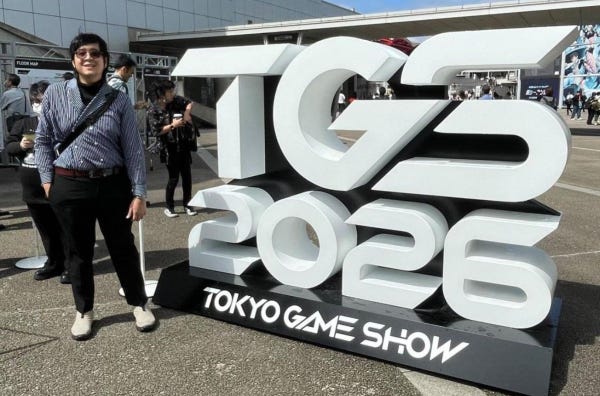
Tokyo Game Show 2026 celebrated its 30th anniversary from September 17 to September 20, with this year’s event presenting a vision of the industry increasingly shaped by established IP, remakes, artificial intelligence, transmedia expansion, and the growing presence of game developers from across Asia. Niko’s Director of East Asia & Southeast Asia Research Darang Candra attended the event and observed that the Southeast Asian markets had a particularly visible presence through dedicated national and regional pavilions. Malaysia marked its tenth consecutive year with an official presence at Tokyo Game Show, while organizations representing South Korea, Thailand, Philippines, and Indonesia, among others, also brought developers to the event. This year’s event saw 257,642 visitors, a slight decline from last year’s 263,101. It should be noted that the event was supposed to last until September 21, but the last day was canceled due to a typhoon warning.
Why this matters: The stronger visibility of other Asian markets contrasted with a significant reduction in participation from mainland China. Chinese exhibitor attendance reportedly declined approximately 40% YoY, amid heightened political tensions between China and Japan, with notable Chinese companies that still put major exhibits include Tencent, Century Games, and XD. This was particularly notable given the increasing international presence of Chinese publishers and developers at other major global events, including gamescom. The contrast highlights how Asia’s games industry is becoming both more internationally connected and more geographically diversified.
China’s public video game companies see 9% revenue growth in H1 2026
An analysis of 64 publicly listed game companies in China shows total game related revenue reached approximately RMB 257.4 billion ($36.2 billion) in H1 2026, up 9% YoY, while combined company net profit increased approximately 10% to RMB 149.9 billion ($21.1 billion). Both growth rates slowed from 2025, and if you exclude Tencent, aggregate game revenue was essentially flat and profit increased just 4.4%. Market concentration continued to increase with Tencent, NetEase and Century Huatong accounting for 79% of total game revenue across the 64 companies, up from 78% in the same period last year.
Why this matters: Growth was increasingly uneven across the wider industry. 39 of the 64 companies, or 61%, reported declining game revenue, compared with 53% a year earlier, indicating that aggregate growth increasingly reflects the performance of a relatively small number of market leaders and breakout titles. Of 29 companies reporting headcount changes, 11 added a combined 931 employees while 17 cut 794 positions. H1 results point to a growing divide within China’s games industry where headline revenue continues to expand, but primarily among the market leaders with evergreen games.
Link to original article (Chinese) →
Indie game sees 90% of sales from China market thanks to streamer campaign
Firebrick Games’ multiplayer card battler One Last Hand launched on Steam on August 14, 2026, after accumulating approximately 10,000 wishlists and 50,000 unique demo players. The dev team reported 16,500 gross unit sales during its first two weeks with approximately 90% of sales from China. The game’s China momentum appears to have started with a relatively inexpensive paid streamer campaign. Larger Chinese streamers subsequently began covering the game organically and broader streamer exposure, word of mouth, and Steam’s discovery systems reportedly reinforced one another and converted into launch sales. The initial campaign seems to have acted as a catalyst for substantially larger organic exposure.
Why this matters: One Last Hand is a two to six player online card battler combining secret bidding and poker inspired hands with Relics and power ups. Most importantly, it launched at RMB 29 ($4.50) with Simplified Chinese localization. The case illustrates how China can become the primary market for small Western Steam games with relatively little initial marketing expenditure when creator exposure triggers organic discovery. It also reinforces the importance of Chinese localization and regional pricing at launch, allowing developers to capitalize immediately when unexpected community or streamer driven momentum emerges.
AI use among Japanese game developers rises to 85% in 2026 per CESA, up from 51% in 2025
A new survey by the Computer Entertainment Supplier’s Association (CESA), the host of Tokyo Game Show, revealed that 85.8% of Japanese game developers are using generative AI in games development, a marked rise from the 51% recorded by the survey in 2025. While CESA did not break down specific use cases, it noted that optimizations around operational efficiency and productivity, the compression of development cycles, and lowering of costs as the main drivers for adoption. These use cases differ from the 2025 report, where the generation of visual assets was the main purpose of the technology, suggesting a shift in how AI is being used.
Why this matters: The survey also noted that human supervision of AI output was the most common measure surrounding its use, citing the importance of not simply using the AI output as-is. This may be due to backlash around the usage of AI in games development, with a recent notable example surrounding the usage of AI assets in Japanese game developer Level-5’s newest titles featured in its latest showcase, Level5 Vision 2026 II: Dreams, which CEO Akihiro Hino addressed in a statement on X. Whether this backlash will materially impact sales of its upcoming titles remains to be seen, however.
Saudi Arabia to launch Kingdom of Gaming event in December 2026
Saudi Arabia will host the inaugural Kingdom of Gaming event in Riyadh from December 1 to December 3, 2026, creating another major industry gathering as the Kingdom continues to position itself as a global hub for games and esports. The event will take place at the Riyadh Exhibition & Convention Center in Malham and is targeting more than 20,000 attendees, 500 studios and developers, 300 exhibitors and sponsors, and 200 investors. More than 200 speakers are expected across four stages, with programming covering game development, publishing, investment, emerging technologies, talent, and esports.
Why this matters: Kingdom of Gaming is primarily positioned as an industry networking and investment platform, bringing together game companies, investors, government institutions, technology providers, and talent to pursue partnerships and commercial opportunities. Savvy Games Group, Ubisoft, and Roblox have been announced as the first Global Gaming Leaders associated with the event, with additional companies expected to be confirmed ahead of December. The country has already used large scale initiatives such as the Esports World Cup and industry conferences to attract international companies and executives, while government backed investment, incubation, and training programs are simultaneously being used to develop the domestic ecosystem.
AI only delivers publicly available data. Don’t build your video game strategy without diving deeper.
TapTap Play Festival connects Chinese players with developers
TapTap held its TapTap Play Festival in Shanghai from September 12 to September 13, 2026, positioning the event between a traditional consumer game convention and an industry developer gathering. The festival included game demos, cosplay, merchandise, and other consumer focused activities, while bringing domestic and international developers directly into discussions with Chinese players. Unlike traditional industry events such as gamescom and ChinaJoy, the festival placed less emphasis on business development and more on direct interaction between game creators and players. Developers participated in Q&As and activities centered on development decisions and community feedback.
Why this matters: The event is increasingly becoming a way for international game developers to reach players in China. The creators of Terraria, attending an event in China for the first time, were shown a community produced video documenting Chinese players’ experiences with the game. inZOI producer Hyungjun Kim similarly participated in an interactive discussion with players covering development tradeoffs such as delaying updates for additional polish. TapTap provides access to a concentrated audience of enthusiast players willing to discover and discuss smaller games, while its 0% revenue share policy lowers the commercial barrier to distribution.
Link to original article (Chinese) →
Counter-Strike Major will return to Shanghai in 2027
Perfect World Esports has confirmed that Shanghai will host Valve’s second Counter-Strike 2 Major of 2027, bringing one of the game’s most important international esports tournaments back to China three years after the city hosted the 2024 Shanghai Major. The tournament is confirmed for a November to December window, although exact dates, format, and prize pool have yet to be officially announced. The decision further strengthens China’s position within the global Counter-Strike esports ecosystem.
Why this matters: Shanghai’s return is particularly notable given the continued importance of Counter-Strike in China’s PC gaming market despite challenges around casual player engagement, cheating, and competition from newer shooters such as Delta Force and Valorant. Major international events provide Perfect World and Valve with an opportunity to reactivate local players, strengthen Counter-Strike‘s visibility, and reinforce its esports credentials.
Kingnet to invest $300 million in consortium acquiring WeMade
Chinese game developer Kingnet Network plans to invest approximately $298 million in a consortium set to become Wemade’s largest shareholder, transforming a company that was previously one of Wemade’s major legal adversaries into a strategic partner focused on expanding the Korean publisher’s business in China. Kingnet will acquire 49% of investment vehicle Neosphere and contribute approximately $298 million through a capital increase. Nexpulse will invest at least $310.2 million and retain the remaining 51%. Neosphere is preparing to acquire a 40.25% stake in Wemade, which would make the consortium its largest shareholder.
Why this matters: The deal is particularly significant because Kingnet and Wemade spent years in legal disputes surrounding royalties and licensing for The Legend of Mir, Wemade’s flagship MMORPG IP and one of the most commercially important Korean game franchises in China. The companies reached an agreement earlier in 2026 to resolve disputes across Korea, China, and Singapore, creating the foundation for a broader commercial relationship. Following completion, the consortium intends to expand Wemade’s publishing and core IP licensing activities in China and other international markets. Nexpulse, is a Chinese investment platform with reported connections to Alibaba and several Chinese game companies.
Bombanana! emerges as hit PC game from Turkish studio
Türkiye’s emerging PC game development ecosystem has produced a breakout hit, with Bombanana! surpassing 1 million Steam sales within 10 days of launch. The three player cooperative party game was developed by Türkiye-based Lefto Studio and published by Tark Games. Bombanana! is built around a communication-driven concept in which three players assume the roles of monkeys who are respectively blind, deaf, and mute. Each player possesses only part of the information required to defuse a bomb, creating a social experience centered on communication, misunderstanding, and emergent interactions between friends.
Why this matters: The title entered launch with significant momentum, having accumulated more than 1 million Steam wishlists and over 6 million demo players globally. Bombanana! is the first title from Tark Games, an Istanbul based independent PC and console publisher established in 2025 with backing led by Türkiye-based games investment firm Ludus Ventures. The country’s mobile sector has already produced internationally successful developers, investors, and exits, creating a foundation of capital and publishing expertise that can increasingly support PC and console studios.
NODWIN Gaming launches sports division to expand beyond esports
NODWIN Gaming has launched NODWIN Sports, a new division focused on developing mainstream sports properties, mass-participation events, sports partnerships, and operational services across India and the wider Global South. Led by former Adidas India sports marketing executive Gurbaksh Singh Virdi, the division will apply NODWIN’s existing capabilities in content, production, partnerships, and community engagement to sports beyond esports. NODWIN’s move reflects a broader expansion from esports into youth entertainment and live experiences, building on properties such as BGMI Masters Series, Comic Con India, and NH7 Weekender.
Why this matters: This matters because NODWIN is increasingly treating audience communities, content, events, and intellectual property as transferable capabilities rather than limiting its growth to esports. For esports stakeholders, the expansion could create additional commercial and partnership opportunities, but it also introduces execution demands and competition for management attention across a broader portfolio.
Events
LA Games Conference
September 30, 2026
Los Angeles, USA
Speaker: Lisa Hanson
Attendee: Alexander Champlin
Use code NikoPartners20 for 20% off
GamingCon Bharat
October 17-18, 2026
Mumbai, India
Speaker: Narinder Kapur