

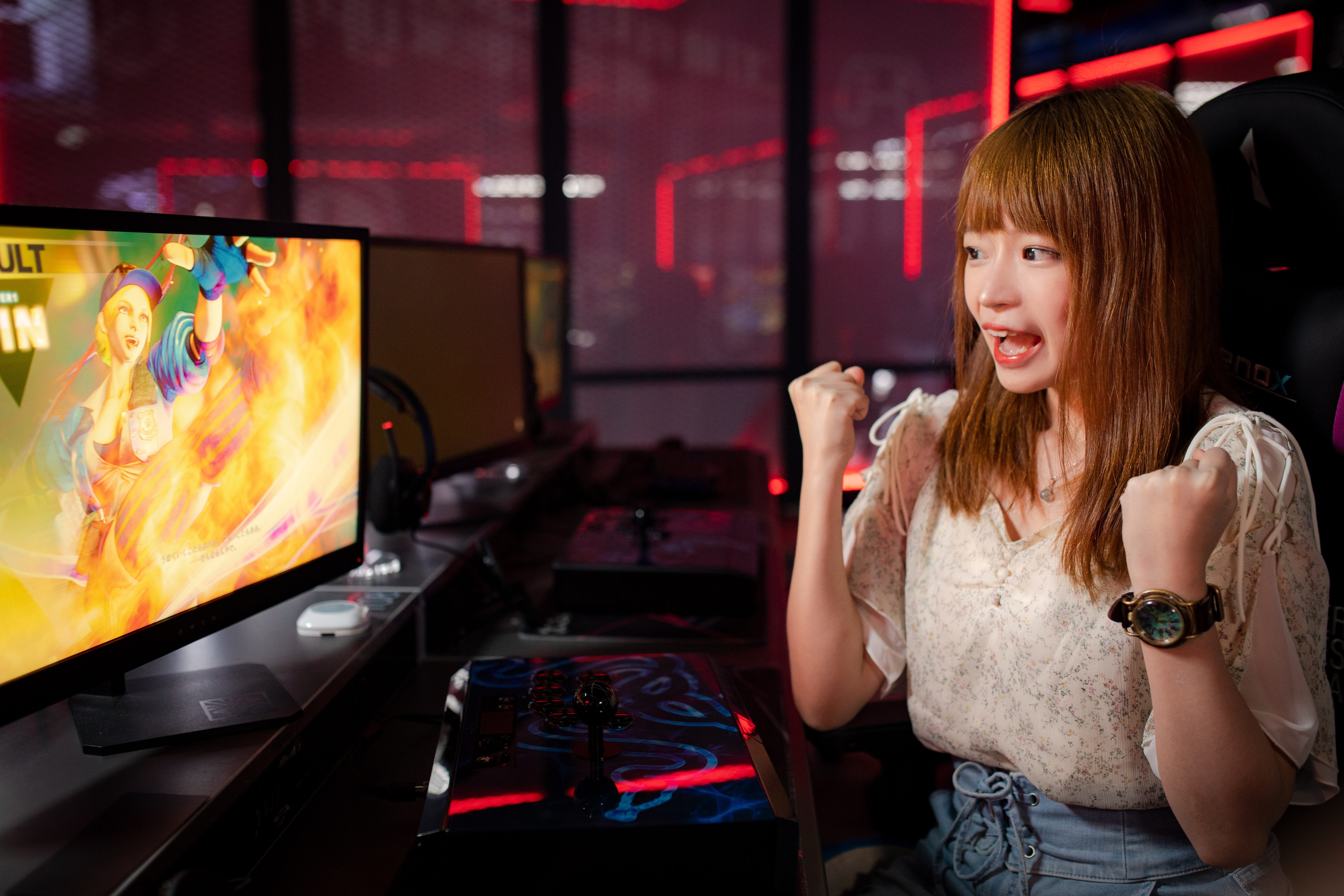
Women are no longer a niche demographic in Asia and MENA’s games market. On International Women’s Day 2026, Niko Partners, a certified woman-owned business, celebrates the growing influence of women shaping the regions’ games industry. In this IWD-special blog post, we explore Asia’s women-oriented games market and how developers and publishers can engage this powerful audience, which we project will account for more than 40% of gamers across Asia and MENA this year.
Chinese game developers replace Japanese voice actor over controversy
On March 2, Papergames confirmed that Japanese voice actor Takuya Sato’s contract for the character Li Shen in Love and Deepspace will end in June 2026. The following day, Hypergryph announced that Sato would also step down from his roles voicing Tsukinogi and 12F in Arknights. The decisions followed the resurfacing of a 2009 personal blog post by Sato referencing a visit to the Yasukuni Shrine, a Japanese site associated with historical war criminals, prompting backlash among players who argued that public figures working in the Chinese market should be sensitive to historical and cultural issues.
Why this matters: Controversies surrounding the shrine are common in China, with many players seeing it as a redline. This incident once again highlights how culturally sensitive topics, especially those relating to WW2, still play a role in modern day China. Players are vocal about issues like this and developers can face reputational risk themselves for associating with an individual or company that is seen as endorsing controversial figures or locations.
Link to original article (Chinese) →
Marathon launch hit with controversy as the game’s launch map seemingly omits Gulf Arab states
The latest game from the developers of Halo and Destiny, Marathon, finally launched this week after much fanfare across the globe. However, Bungie caught the ire of gamers in GCC states, especially in Saudi Arabia, after their launch map, with specific launch times per country, seemingly omitted the Gulf Arab States. Many Arab gamers felt angry at the decision, with a minority calling for boycotts and cancelling their pre-orders. Prominent games journalists in the region even demanded an apology from Bungie and/or their owners, Sony Interactive Entertainment.
Why this matters: While a minor issue on the surface, the exclusion of less mature gaming markets from launch time maps has been a common issue raised by gamers from these regions in the past. While we cannot pinpoint a single reason why the MENA region was excluded from the launch time map in this case, we continue to see how gamers in the region have grown increasingly frustrated over this pattern, especially as their status in the games industry grows.
Link to original article (Arabic) →
Valve incorporates Indonesia Game Rating System into Steam’s content rating system
The Indonesian government requires all video games entering the local market to adopt the Indonesia Game Rating System (IGRS). To avoid manual submissions for the tens of thousands of games released annually, IGRS is integrating with automated systems—using the International Age Rating Coalition (IARC) for console titles and a separate integration for Steam to cover all games released in Indonesia. On PC, Valve has begun informing developers through Steamworks that an IGRS rating is required for release in Indonesia, with Steam’s updated content survey automatically generating the rating when possible.
Why this matters: The integration of IGRS with global rating systems like IARC and platform tools such as Steam’s content survey shows Indonesia is moving from policy announcements to practical enforcement of local age ratings. Developers and publishers should watch how full IGRS integration will affect launch timelines, compliance workflows, and how gambling‑like mechanics are handled in one of Southeast Asia’s key markets.
Link to original article (Indonesian) →
Korea FTC fines Webzen for deceptive character sales ahead of game shutdown
Korea’s Fair Trade Commission issued a corrective order and a fine of KRW 5 million (US$3,400) against Webzen for concealing its decision to terminate the service of the game Master of Garden (Korean title: I Want to Become a Dark Master/어둠의 실력자가 되고싶어) and releasing new characters to induce additional spending. The company had internally confirmed the service shutdown at the end of July 2024 due to declining sales but responded to user inquiries by stating that it was not considering ending the game, while launching 16 new characters for sale in August 2024.
Why this matters: The regulator stated that informing users of false information despite confirming termination constituted misleading conduct designed to entice consumer purchases. This enforcement action highlights growing regulatory scrutiny of deceptive monetization practices in Korea’s mobile gaming market. Publishers and developers operating in Korea should expect tighter oversight on transparency, especially around service shutdowns and in‑game sales.
Niko delivers the ‘why-behind-the-what’ that AI tools cannot.
Nintendo sues U.S government after tariffs are deemed illegal by Supreme Court
Nintendo has announced that they are suing the current US administration over tariffs that President Trump imposed last year. Following the Supreme Court’s ruling that said tariffs were indeed unlawful on Feb. 20, many other companies have filed similar lawsuits, including Costco and FedEx. The goal is to have the US reimburse Nintendo for all the tariffs they paid since Feb. 1 2025. Nintendo’s lawyers wrote “All tariffs collected under the IEEPA Duties must be refunded with interest...”. Sony and Microsoft have yet to launch their own lawsuit.
Why this matters: Nintendo has been hit with a number of headwinds over the past year, from high tariffs, to surging memory prices, and other global macroeconomic conditions that have impacted the launch of its Switch 2 console. While a win would be unlikely to change conditions for consumers, it could set a precedent for other game related companies to raise the issue as well. It will also be interesting to see how much Nintendo seeks in damages, as a large number would provide perspective on how damaging Nintendo viewed the tariffs to be for to the Switch 2’s launch.
Chinese video game companies turn to criminal prosecutions for game leaks
Authorities in Shanghai have launched the city’s first criminal investigation into video game content leaks, arresting three suspects accused of distributing unreleased material from titles developed by miHoYo. The case involves leaked gameplay footage and character content from Genshin Impact and Honkai: Star Rail, which were uploaded to Chinese video platform Bilibili, private online groups, and gaming wikis. The leaks were first reported to authorities by miHoYo in October.
Why this matters: Historically, game leaks in China have primarily been addressed through platform enforcement mechanisms such as account bans or content removals. However, the case signals a shift toward stronger legal enforcement. The move follows updated guidance issued by China’s Supreme People’s Court in April 2025, which clarified how criminal law can be applied to intellectual property violations, including copyright infringement tied to digital content.
Link to original article (Chinese) →
NetEase acquires 10% stake in social deduction game developer
NetEase has acquired a 10% stake in Hangzhou-based startup Xing Han Ming Kong Network Technology, signaling continued investment in experimental game concepts despite broader restructuring across its global studio network. According to corporate filings, the studio had 18 employees as of 2024. NetEase’s investment centers on the studio’s debut title Celestial Fall. The project reimagines the traditional “Werewolf” style social deduction genre with a significantly higher production budget and presentation quality.
Why this matters: For NetEase, the investment reflects a broader strategic interest in creating AAA games for genres and concepts that were previously low budget. The project is being developed using Unreal Engine 5, and in January 2026 it was selected for the Epic MegaGrants scheme, receiving $10,000 in development funding. The project highlights how Chinese publishers are increasingly exploring ways to combine AAA production pipelines with social gameplay systems.
Link to original article (Chinese) →
NCsoft to acquire 70% stake in mobile rewards platform JustPlay
NCsoft has agreed to acquire a 70% stake in Berlin-based mobile rewards platform JustPlay for $204.8 million. Founded in 2020, JustPlay operates a play-to-earn mobile rewards platform where users earn real-world incentives such as cash or vouchers for engaging with mobile games and apps. Data from Appmagic estimates that the company’s flagship app, JustPlay: Earn Money or Donate, has generated more than 33 million installs globally. The acquisition forms part of NCsoft’s broader strategic pivot into casual and mobile gaming.
Why this matters: NCsoft is primarily known for its core MMORPG franchises such as Lineage and Guild Wars, but recently established a dedicated mobile casual gaming segment in 2025. By securing a controlling stake in JustPlay, NCsoft gains access to a user acquisition and monetization platform that connects game engagement with real-world rewards, an increasingly common model within casual mobile gaming ecosystems. The platform effectively functions as a distribution and retention layer for casual games.
Shinji Mikami founds new AAA studio
Veteran game director Shinji Mikami has established a new independent AAA studio called Unbound. The studio is focused on developing original IP for console and PC, positioning itself as a mid-sized AAA developer targeting immersive single-player experiences. Unbound currently employs approximately 50 staff members, with plans to expand to around 150 employees as development progresses.
Why this matters: The launch of Unbound follows Mikami’s departure from Tango Gameworks in February 2023, where he previously led projects including The Evil Within. Unbound reflects a continuing trend of high-profile Japanese developers launching independent studios after leaving large publishers. With a targeted mid-sized structure, such studios aim to deliver premium-quality games without the overhead of large AAA teams.
Link to original article (Chinese) →
NetEase set to cut funding to Nagoshi Studio amid overseas strategy shift
NetEase has reportedly decided to halt funding for Gang of Dragon, a title being developed by Nagoshi Studio led by industry veteran Toshihiro Nagoshi. According to internal reports cited by employees, the decision follows NetEase’s discovery that the project would require an additional ¥7 billion ($44.4 million) to reach completion. Funding is expected to be cut in May 2026. Gang of Dragon is an action title featuring Ma Dong-seok, known internationally for roles in Train to Busan, The Outlaws, and Eternals.
Why this matters: The project was positioned as one of NetEase’s high-profile overseas AAA investments following the company’s aggressive global studio expansion in the early 2020s. The situation reflects a broader shift in strategy among major Chinese publishers. Both NetEase and Tencent previously invested heavily in establishing or funding overseas studios to accelerate AAA development capabilities. However, many of these projects have faced long development cycles, rising production budgets, and uncertain commercial timelines, leading publishers to reassess return-on-investment expectations.
Link to original article (Chinese) →
Events
GDC Festival of Gaming
March 9-13, 2026
San Francisco, USA
Attendees: Lisa Hanson, Alexander Champlin
Mobidictum Mixer - Ho Chi Minh City
March 18, 2026
Ho Chi Minh City, Vietnam
Attendees: Linh Diep, Hung Tang
India Gaming Show
April 17-19, 2026
Chennai, India
Attendee: Narinder Kapur
GamesBeat Summit
May 18-19, 2026
Los Angeles, USA
Speaker: Lisa Hanson