

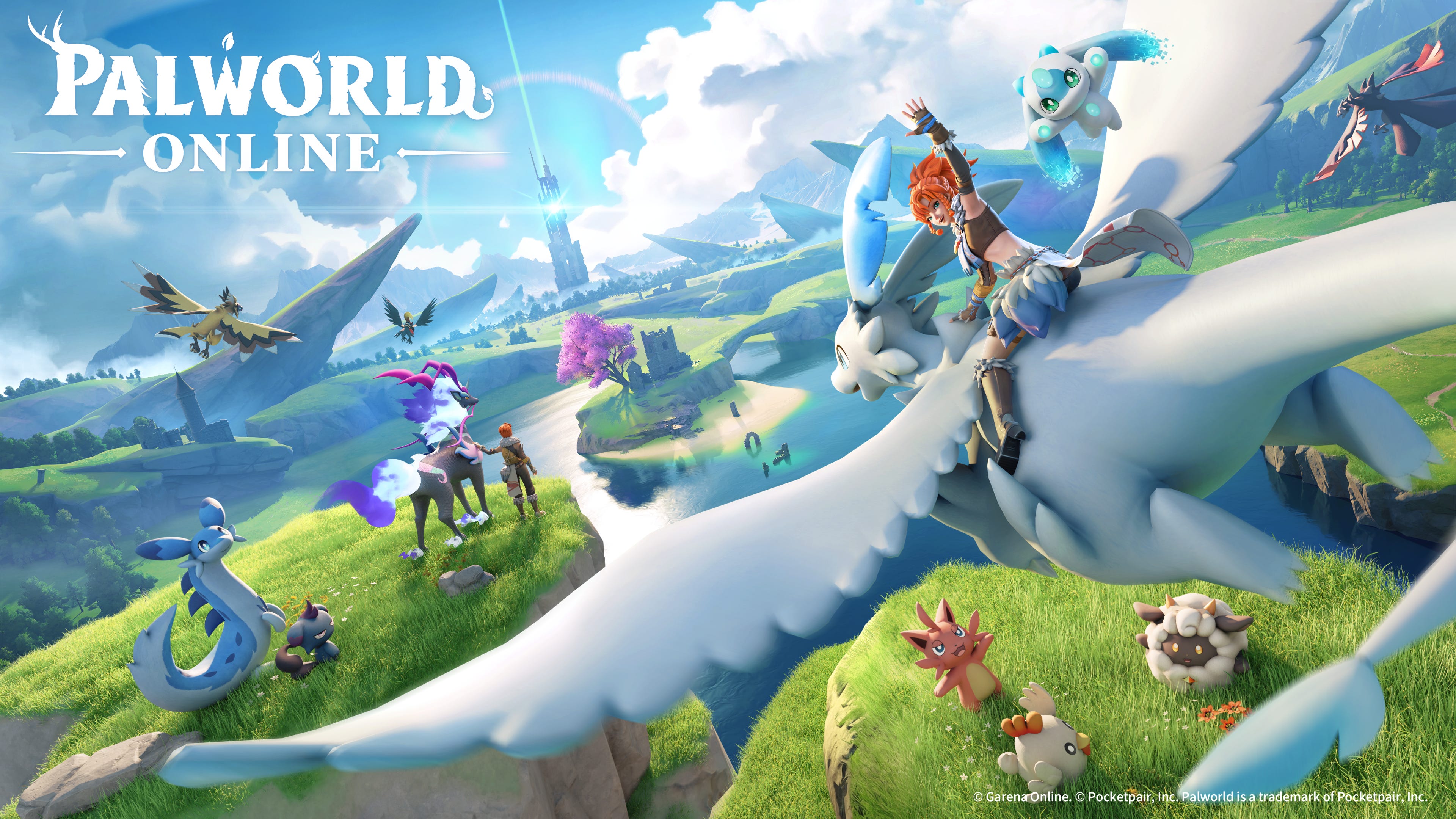
Garena has announced Palworld Online, a mobile MMORPG officially licensed by Pocketpair and scheduled for release in 2026. The game is developed by Garena’s Singapore team and reimagines the original Palworld PC and console game for mobile while expanding it into a persistent online world with a new storyline, seamless open-world exploration, and multiplayer gameplay. Garena stated that it is working closely with Pocketpair to preserve the core gameplay and freedom of the original title while adapting it for mobile audiences.
Why this matters: Palworld was a surprise hit in 2024 and recently surpassed the 40 million players milestone ahead of its full 1.0 release last month. The launch on Steam and Xbox Game Pass, with a PlayStation 5 launch shortly after, has helped the game reach a broad audience globally, and Pocketpair is now looking to reach an even larger audience with a mobile release. Garena is a strong partner for mobile game development given its success with the Free Fire franchise and its strong distribution capabilities across Asia.
Southeast Asia’s Games Market Heads Toward $7B by 2030 - New Niko Partners Research
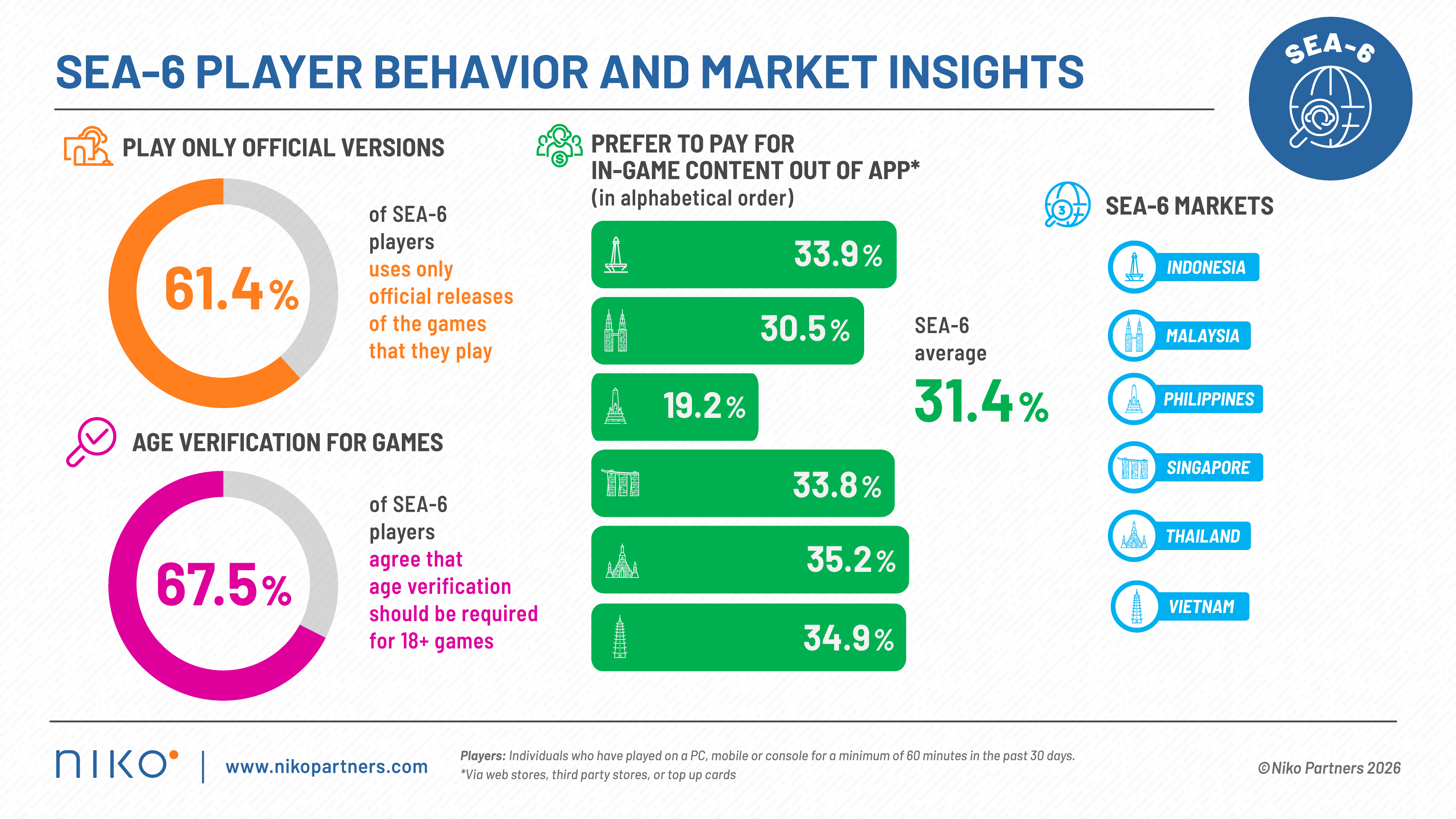
Southeast Asia’s games market is on track to reach $7 billion by 2030. While the region continues to grow, each of the six notable markets that Niko Partners tracks is following its own unique path.
High-population markets such as Indonesia, the Philippines, and Vietnam are emerging as increasing smartphone adoption and improved internet access bring millions of new players into gaming. Meanwhile, more mature markets such as Malaysia, Singapore, and Thailand are driving growth through localized content, thriving esports scene, and strong community engagement.
Discover more key insights and download the select takeaways from Niko Partners’ Player Behavior & Market Insights Reports.
PGDX 2026 Highlights from Niko Partners
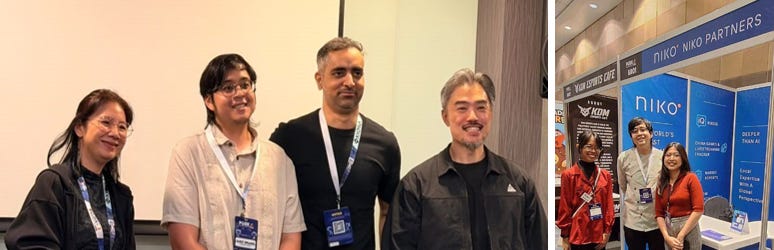
The Philippine Game Development Expo returned in 2026, organized by CBZN Perspective and the Game Developers Association of the Philippines (GDAP), and was held on July 24-26 at the SMX Convention Center Manila. The event showcased the growth of the Philippine game development ecosystem. The expo featured more than 60 indie game exhibitors, highlighting locally developed titles such as Polychroma Games’ Until Then and Yangyang Mobile’s High Times, alongside international developer showcases.
Darang Candra, Director for Southeast Asia and East Asia Research at Niko Partners, also attended the event and spoke at the Trends in Southeast Asia’s Games Market panel.
Why this matters: Beyond game showcases, PGDX 2026 served as a platform for developers and players to connect through community activities, workshops, and industry networking opportunities. The event also showcased the growth and visibility of Filipino game creators in the global gaming market.
Niko Partners at GameForge 2026

Niko Partners Senior Analyst Narinder Kapur will share our latest insights at GameForce 2026 in Mumbai on August 10. The event,co-hosted by the Indian Digital Gaming Society (IDGS) and Jio Institute, will bring together representatives from the games industry, academia, government, and tech to explore how AI is reshaping and future of esports. The panelists will also discuss future opportunities and career pathways in the age of AI.
Sega establishes wholly owned Shanghai subsidiary to expand its presence in China
On August 3, Sega announced that it has established a new local subsidiary, SEGA (Shanghai) Entertainment Technology Co., Ltd., in Shanghai, China, on June 12, 2026, to strengthen its business presence in the country through the promotion and marketing of its intellectual property (IP) and content. Sega stated China has become an increasingly important entertainment market with continued growth opportunities across games, content, licensing, and merchandising businesses. Through the Shanghai subsidiary, the company aims to deepen its understanding of the local market, strengthen partnerships, and build operational capabilities to support future growth in China.
Why this matters: The announcement comes just ten days after Sega opened a new flagship store in Beijing. Sega’s establishment of a wholly owned Shanghai subsidiary highlights the growing strategic importance of mainland China not only as a large video game market but also as a key market for Japanese IP licensing and merchandising. The move may enable Sega to localize partnerships and commercial initiatives more effectively, reflecting a broader trend of global game companies investing in on-the-ground operations to capture growth opportunities in China.
Link to original article (Japanese) →
Nazara Technologies CEO Nitish Mittersain Steps Down After 26 Years
Nazara Technologies founder Nitish Mittersain will step down as CEO on September 1, 2026, ending more than 26 years in the role across two separate tenures. Mittersain will remain Managing Director. Subject to board approval, Raymond Albaladejo Stauffer will become Nazara’s new CEO. Stauffer previously founded Spanish mobile game publisher Bluetile, which ranked among Spain’s leading mobile publishers by downloads in 2025. The leadership transition comes as Nazara navigates a mixed financial environment. In the first quarter of FY27, the company reported a 14% YoY decline in operating revenue and recorded a quarterly loss.
Why this matters: With Mittersain remaining on the board, the move does not signal a drastic change in direction, but a realignment given Nazara’s moves and ambitions over the past year. In Q1, gaming remained Nazara’s largest business, accounting for 60.4% of operating revenue. Gaming revenue increased 14.1% YoY to Rs 275 crore from Rs 241 crore a year earlier. In contrast, esports revenue declined 81.8% YoY to Rs 28 crore, reflecting Nazara’s reduced ownership in NODWIN Gaming, which has transitioned from a subsidiary to an associate company.
MCST reveals plans to expand funding and policy support for game industry
On July 28, South Korea’s Ministry of Culture, Sports and Tourism (MCST) outlined plans to expand support for the domestic game industry, including a new funding program that would provide approximately KRW 3 billion ($2.1 million) per project for games with development budgets between KRW 10 billion ($7 million) and KRW 50 billion ($35 million), subject to budget approval. The ministry revealed plans to increase support for indie developers, expand export assistance and overseas exhibition programs, broaden AI adoption initiatives, and increase game industry internship opportunities for young workers.
Why this matters: Korea’s proposed game industry support package signals a greater policy focus on strengthening domestic content creation and improving the competitiveness of mid-sized developers. Additional measures under review include expanding policy financing, introducing production cost tax credits, and strengthening enforcement against illegal private servers through tougher penalties and punitive damages.
Link to original article (Korean) →
AI is no match for Niko’s on-the-ground analysts and data gathering methods.
505 Games and Digital Bros announce sequel for Wuchang: Fallen Feathers
A sequel to Wuchang: Fallen Feathers has been officially announced following Digital Bros’ acquisition of the franchise. Earlier this year, the Italian publisher, the parent company of 505 Games, acquired the Wuchang IP from Chinese developer Leenzee for approximately 4 million euro. The sequel will be published by 505 Games and developed by Indolphinity, the new studio founded by Wuchang director and producer Xia Siyuan. The original Wuchang: Fallen Feathers launched in 2025 to generally positive critical reception, achieving a Metacritic score of 74.
Why this matters: While the original game reached 5 million players, Leenzee underwent significant layoffs a few months after launch. This was primarily due to its weak commercial performance outside of Xbox Game Pass, as well as criticism from Chinese players over story elements that blurred historical themes, prompting post launch revisions. While Leenzee no longer controls the franchise it created, the return of the original game’s director through a new studio provides continuity for the series.
Tencent revives QQ Pet with AI enhancements
Tencent has officially relaunched the classic QQ Pet franchise within the mobile QQ app, marking the return of one of China’s most recognizable virtual pet experiences. QQ Pet first launched for PC in 2005 and surpassed one million concurrent users by 2006. The new version modernizes the original experience with fully animated 3D pets to adopt, replacing the classic 2D penguin characters while retaining familiar gameplay. Players can feed, bathe, educate, send pets to work or on adventures, and gradually develop their companions. Social features remain central, allowing users to visit friends’ pet homes, help care for pets, compete in battles, and collaborate on in game work.
Why this matters: The most significant addition is integration with Tencent’s Hunyuan Hy3 large language model. Rather than transforming QQ Pet into a conversational AI companion, the model is used to enhance existing gameplay through personalized pet diaries, random events, contextual summaries, and more varied character interactions. Core progression continues to revolve around traditional virtual pet mechanics, with AI primarily enriching expression and reducing repetitive scripted interactions. QQ Pet’s return, in addition to being a nostalgia play, reflects a broader trend of Chinese gaming and technology companies experimenting in the companion AI space. The release comes shortly after miHoYo released its own AI project called BSide: Olivia Lin.
Link to original article (Chinese) →
Chinese GPU firm MetaX files for Hong Kong IPO
Chinese GPU firm MetaX has confidentially filed for an initial public offering (IPO) in Hong Kong, joining a growing wave of domestic chip companies seeking public funding. The planned listing comes as Chinese semiconductor firms accelerate investment to develop alternatives to Nvidia’s GPUs amid continued demand for AI computing infrastructure. Founded in 2020, MetaX has become one of China’s most closely watched GPU startups, supported by a founding team that includes former AMD executives. MetaX previously pursued a listing on Shanghai’s STAR Market in late 2025 and is now seeking to raise capital through Hong Kong.
Why this matters: The filing follows several successful IPOs by Chinese AI and GPU chip firms including Biren Technology and Iluvatar CoreX. Meanwhile, Kunlunxin, Baidu’s AI chip subsidiary, has also confidentially filed for a Hong Kong listing and was previously reported to be seeking a valuation of at least RMB 100 billion ($13.9 billion). As Chinese GPU developers mature and capital markets continue supporting domestic chipmakers, the country’s semiconductor ecosystem is expected to become increasingly competitive across both AI and gaming.
Events
GameForge 2026
August 10, 2026
Mumbai, India
Speaker: Narinder Kapur
Contact us to set up a meeting →

Garena feels like a very deliberate choice here. Palworld was already dangerously compatible with the “just five more minutes” brain, and now it’s being handed to a company that knows mobile live service inside out. With Southeast Asia’s games market still growing fast, this could end up being much more than a side project. Do you think Palworld Online can become bigger in Asia than the original game?