

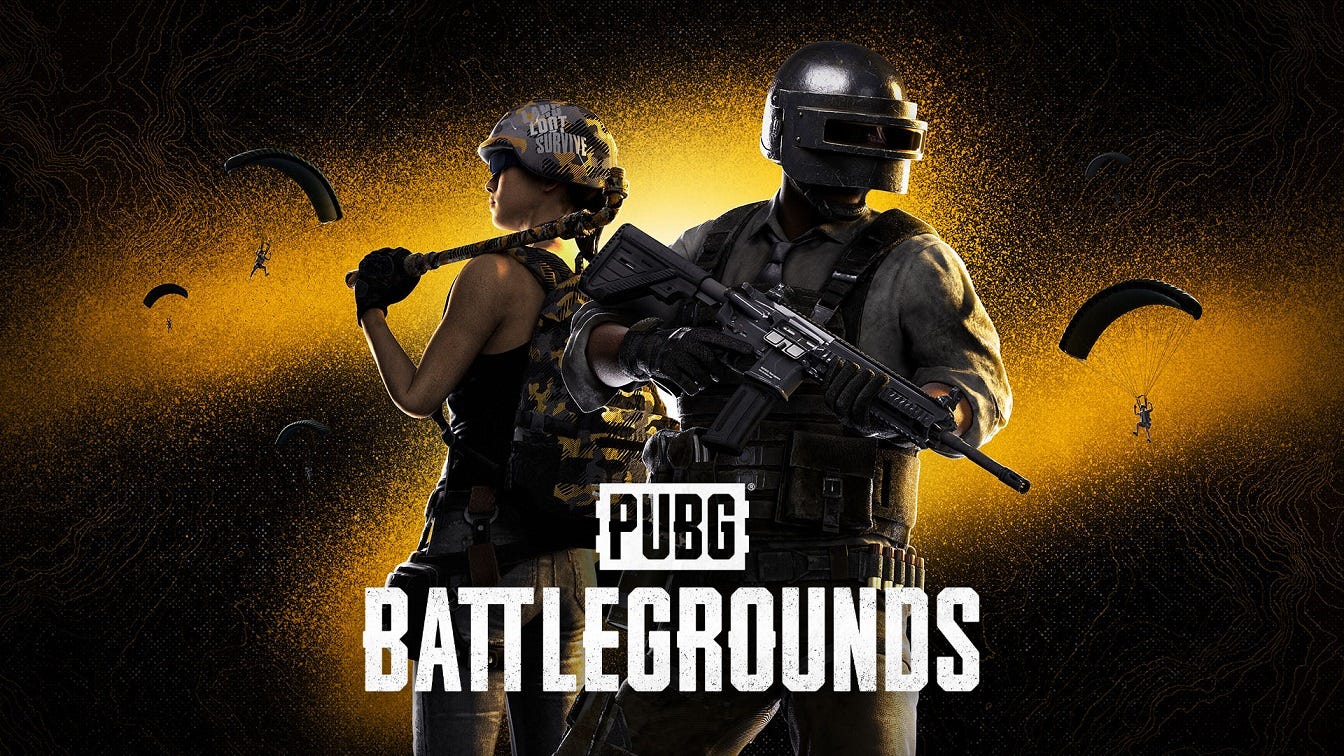
Krafton has launched a global beta test for Ally Duo, a new arcade mode in PUBG Battlegrounds that pairs players with an AI companion. The two week beta runs from June 17 to July 1 and supports voice interactions in Chinese, English, and Korean. The mode features Ella, an AI-powered companion built on Krafton’s PUBG Ally technology. Players team up with Ella and can issue voice commands related to movement, item collection, combat support, and strategy. Unlike traditional NPCs, Ella is designed as a Co Playable Character (CPC) that actively collaborates with players and adapts to evolving gameplay situations.
Why this matters: PUBG Ally is powered by an on device small language model built using Nvidia ACE technology and incorporates speech to text and text to speech functionality. According to Krafton, the system can process both player commands and real time game context to determine appropriate actions. The AI is designed to respond with low latency for immediate gameplay tasks while also handling more complex strategic decisions that require contextual understanding. One potential use case is addressing a common frustration in team based battle royale gameplay, where human teammates may separate from the group or fail to coordinate effectively.
Roblox to keep chat off in MENA until Arabic moderation matures
Roblox Corporation has confirmed that chat functionality remains disabled across much of the Middle East and North Africa as the company continues developing Arabic language moderation and safety systems. The restriction has been in place since last year and applies to users of all ages in most affected markets. According to Roblox, its English language personal information detection technology currently identifies 98% of attempts to share sensitive information that could place players at risk. However, the company believes its Arabic language moderation tools have not yet reached a comparable level of effectiveness.
Why this matters: The policy aligns with Roblox‘s broader safety framework. Globally, chat is disabled by default for users under the age of nine, while additional safeguards and age appropriate protections are applied across the platform. In MENA, however, the current restrictions extend beyond younger users due to regulatory and content. While temporary restrictions and bans imposed in certain countries have since been resolved through engagement with local authorities, Egypt continues to block access to the platform, with no clear timeline for a potential reinstatement.
Nintendo tightens Switch 2 purchasing rules in Japan
Nintendo has introduced new purchase restrictions for the multi-language version of the Nintendo Switch 2 in Japan after identifying increased demand from resellers seeking to exploit regional price differences created by the weak Japanese yen. Under the revised rules, purchases will be limited to one console per Nintendo account. In addition, buyers must have accumulated at least 50 hours of Nintendo Switch playtime by the end of May 2026 to qualify. Nintendo has also temporarily paused sales while implementing the new purchasing framework.
Why this matters: The move follows recent hardware price increases across the United States, Canada, and Europe. The restrictions mirror measures introduced during the Switch 2 launch in June 2025, when consumers in the United States, Canada, and the United Kingdom were required to have at least two years of Nintendo Switch Online membership alongside 50 hours of gameplay activity. Nintendo stated at the time that the goal was to prioritize genuine players over resellers. The decision highlights the ongoing challenges hardware manufacturers face in balancing supply, demand, and regional pricing strategies.
NetEase revives development on Three Kingdoms strategy game
NetEase has revived development of Infinite Borders: Three Kingdoms, a premium single player Three Kingdoms strategy title that was cancelled last year despite four years of development and a team of approximately 70 developers. The project is now being maintained by a team of just eight developers, with AI tools and user generated content positioned as core pillars of future content creation and iteration. According to the development team, these technologies are necessary to accelerate content production, updates, and long term support given the significantly reduced headcount.
Why this matters: The game originally featured a large scale strategic map with terrain and weather systems, multiple factions and generals, and sandbox style gameplay elements. These systems are now being leveraged to support UGC creation. For NetEase, the project serves as an early example of how previously large scale games may evolve into creator driven platforms, allowing smaller teams to support content rich experiences that would previously have required significantly larger development resources. The title also highlights how AI and UGC are increasingly being viewed not just as player features, but as tools to improve the commercial viability of niche premium game projects.
Link to original article (Chinese) →
Meccha Chameleon sells 2 million units in less than a week
Meccha Chameleon, an innovative multiplayer hide-and-seek game by Japanese indie game developer, Lemorion, has sold over 2 million units since its Steam debut on June 10, 2026. Remarkably, the game jumped from 1.1 million sales on June 14 to 2 million by the evening of June 15, moving nearly a million units in a single 24-hour period. The multiplayer game, designed for groups of 2 to 10 players, features a unique mechanic where players customize blank white avatars with drawings to camouflage themselves against a team of seekers. The developer is sustaining momentum with a near-launch map update and an ongoing sale.
Why this matters: Meccha Chameleon is providing a unique twist on the “prop hunt” game mode that has become popular recently by allowing players to paint their character to blend in with the game world. The title builds on the social gaming trend that accelerated during COVID by incorporating team focused elements and streamer friendly gameplay, which has caused it to go viral. It’s also another example of a small indie developer finding success on Steam with a low budget title, which is becoming a common occurrence.
Link to original article (Japanese) →
miHoYo wins defamation lawsuit against gaming content creator
miHoYo has secured a final legal victory in a defamation lawsuit against a content creator named Li, known online as Fanshu Jianshangjia. According to the company’s legal department, the court ruled in miHoYo’s favor and ordered Li to pay RMB 500,000 ($69,700) in damages and issue public apologies across multiple social media platforms. Li operated accounts on Bilibili, Douyin, Kuaishou, and Xiaohongshu, where he regularly published content related to miHoYo titles including Genshin Impact, Honkai: Star Rail, and Zenless Zone Zero.
Why this matters: miHoYo alleged that the creator repeatedly used insulting language toward its games and player communities while publishing misleading commentary and reviews. According to the court’s findings, the content in question was not considered ordinary game discussion, news reporting, or commentary conducted in the public interest. The ruling comes amid growing scrutiny of “outrage content” across global gaming communities, where some creators have built audiences through highly provocative or sensationalized criticism.
Chinese players criticize Stellar Blade: Blood Rain over some AI-generated aspects
Stellar Blade: Blood Rain has received minor criticism from Chinese players following the release of its reveal trailer, with fans identifying what they believe to be AI-generated background assets in several scenes. The criticism centers primarily on environmental details rather than core gameplay footage. Players highlighted architectural elements that appeared visually inconsistent and, more notably, several instances of Chinese text that were either nonsensical or unreadable. The game is said to be taking place in the Chinese city of Chongqing.
Why this matters: Despite the criticism, interest in the sequel remains strong in China. The original Stellar Blade performed well following its PC launch and developed a sizable Chinese player base, making Blood Rain one of the more closely watched upcoming action titles in the market. Players are generally more accepting of AI when it remains invisible within production pipelines, but visible AI artifacts can quickly become a focal point for criticism.
Link to original article (Chinese) →
AI is no match for Niko’s on-the-ground analysts and data gathering methods.
Honor of Kings adds football mini game ahead of World Cup
Tencent has added a new limited time 3v3 football mode to the test server of Honor of Kings, expanding the game’s portfolio of alternative gameplay experiences beyond its core MOBA format. In the new mode, teams of three players compete using football themed mechanics rather than traditional MOBA objectives. Players can dribble, shoot, tackle, pass, and sprint, with the first team to score four goals declared the winner. Matches are capped at six minutes, after which the team with the higher score wins.
Why this matters: The addition aligns with the start of the FIFA World Cup. Rather than relying solely on traditional events and cosmetics, Chinese publishers are increasingly introducing entirely new game modes to drive engagement during major global events and holidays. This approach helps extend player engagement, provides fresh content between major updates, and allows Tencent to capitalize on global events such as the World Cup without requiring a separate licensed football title.
Link to original article (Chinese) →
Unity China launches AI coding assistant for developers
Unity China has begun public testing of Cowork, an AI development assistant designed specifically for Unity China Engine projects. The tool’s core functionality centers on AI-assisted programming, but also includes project understanding, asset generation, code review, debugging and repair, and task automation capabilities. This initiative also introduces a new recurring monetization opportunity for Unity, as development-related AI workloads typically generate significantly higher token consumption and usage frequency than standard chatbot applications.
Why this matters: What differentiates Cowork from general purpose AI coding assistants is its engine level integration. Because Unity China has direct access to the underlying architecture of its game engine, the tool can interact with engine systems, asset pipelines, editor functions, and project structures in ways that external AI coding tools cannot. The launch reflects a broader shift toward AI-assisted game development across China.
Link to original article (Chinese) →
Events
Philippine Game Dev Expo (PGDX)
July 24-26, 2026
Manila, The Philippines
Speaker: Darang Candra
ChinaJoy
July 31-August 3, 2026
Shanghai, China
Attendee: Xiaofeng Zeng