

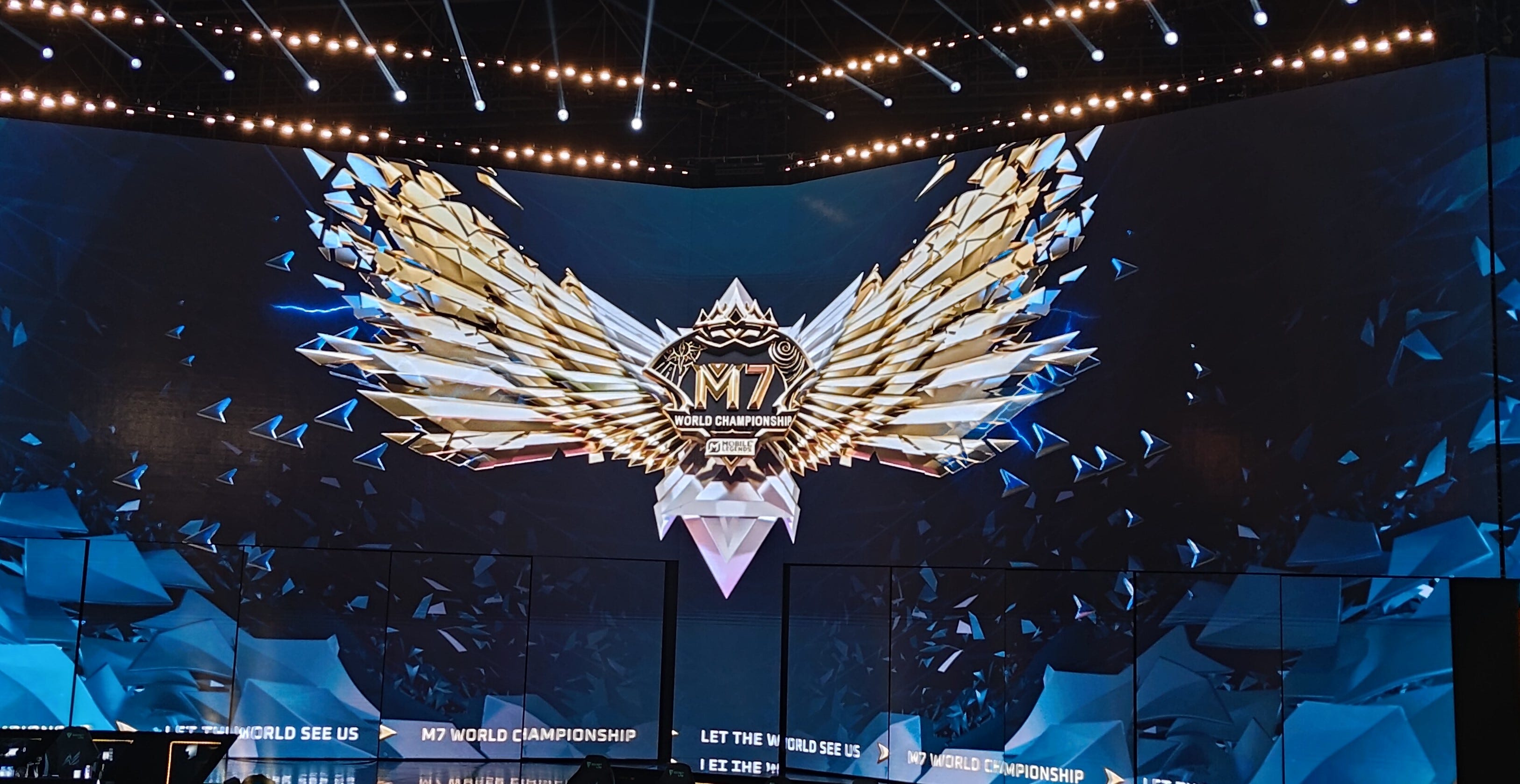
On January 26, it was reported by Esports Charts that the M7 World Championship, which took place in Jakarta, Indonesia, became the most watched mobile esports event in history, reaching 5.68 million peak viewers. In addition, it also became the most-watched Mobile Legends: Bang Bang (MLBB) World Championship, surpassing the previous record set during M5. Compared to the M6 World Championship last year, peak viewership increased by 1.5 million, or 36%, setting a new record. Niko Analysts Darang, Jaq, and Edward attended the event – look for a blog post about the experience next week!
Why this matters: Viewership surpassed the global record for mobile esports that had been held since 2021 by the Free Fire World Series in Singapore. According to data from Esports Charts, Mobile Legends: Bang Bang ranked as the second most-watched esports title globally in 2025 on non-China video platforms, trailing only League of Legends. Its performance is particularly notable as it was achieved entirely through regional tournaments in 2025, as the M6 World Championship was held in late 2024 and the M7 Championship was held in 2026.
Rovio to launch new Angry Birds titles in China with new partnership
Rovio Entertainment has stated that Angry Birds will officially return to mainland China via a new strategic partnership with Kingsoft. Under the agreement, Kingsoft will act as the exclusive publisher and operator of the Angry Birds franchise in China, marking the IP’s first major re-entry into the market after several years of limited presence. Two titles have been announced as part of the initial rollout, Angry Birds 2 and Angry Birds Dream Blast, with the former being pre-installed on the Xiaomi 17 Pro Max Smartphone.
Why this matters: Niko Partners research shows that the Angry Birds franchise has long been popular in China, but its games have not had a significant presence in recent years. The Angry Birds Movie grossed $75 million in 2016, representing about 21% of total revenue. Rovio received 2 new ISBN licenses for the titles in January 2026, but no release date has been announced for the games at this point. Beyond core releases, Rovio and Kingsoft also unveiled the “Mischief Maker” Creator Program to encourage UGC initiatives. As we said to Dean at GamesBeat about Angry Birds in China: “This was a popular game in China. If the new version has new gameplay and social features it could be a big hit there. If it is basically the same as before, we won’t expect much.”
South Korea to request additional game license approvals from Chinese regulator
The South Korean government has confirmed it will formally request that Chinese authorities expand the issuance of game licenses (ISBNs) for Korean-developed titles in 2026, positioning games as a central pillar of its broader cultural and economic growth agenda. The plan was outlined in the country’s newly released 2026 Economic Growth Strategy, jointly announced by the Ministry of Economy and Finance and other relevant ministries.
Why this matters: Niko Partners research shows that South Korea emerged as the #1 country for import game approvals this year, with around 20% of ISBNs for import games in 2025 originated in Korea. This is in contrast to prior years where Japan was the #1 country, and even more so compared to 2017-2021 when China stopped issuing licenses to South Korean games due to tensions over the US involvement in Korea for its THAAD missile system deployment. Korea is looking to make its #1 spot permanent.
Savvy Games and NEOM sign MOU to facilitate gaming startup ecosystem
Savvy Games Group and NEOM have signed a new memorandum of understanding. With the new deal in place, gaming startups graduating from Nine66’s incubator, where new studios learn how to build game prototypes, will have a smoother transition as they enter NEOM’s ‘Level Up’ accelerator program, where the studios can now access funding and receive mentorship, and learn to become a self-sufficient business. The Saudi Arabia Public Investment Fund (PIF) is the parent organization behind both Savvy Games Group and Neom.
Why this matters: PIF backed entities continue to collaborate on achieving goals of the country’s National Gaming & Esports Strategy. This move is designed to increase support for new game studios in the country and develop a robust talent base. By setting up novice gaming startups with a clearer pipeline for sustainability and success, the aim is to increase the number of successful domestic game studios in the country that can develop titles for the local and global market.
American Congressmen filed concerns over Saudi’s acquisition of Electronic Arts
More than 40 members of the United States Congress filed concerns with the Federal Trade Commission (FTC) regarding Saudi Arabia’s Public Investment Fund (PIF) and its proposed acquisition of Electronic Arts (EA). Their primary concern centers on the potential for increased instability for workers. They highlighted that gaming workers, particularly those employed by EA, could face post-transaction layoffs. As a result, they have urged the FTC to review the proposed acquisition of EA.
Why this matters: The acquisition will require EA to take on a $20 billion loan to finance the deal which could lead to the acquiring firms pursuing cost-cutting measures, including layoffs, offshoring, restructuring, or studio closures. EA has made significant layoffs in recent years, but recently suggested the proposed buyout won’t result in “immediate” job cuts. The company also claimed it will retain creative control under its prospective new owners. Concerns were also raised over the long-term competitiveness of the U.S. video game industry.
Stellar Blade sequel to be set in China following success of original game
South Korean developer Shift Up has signaled that Stellar Blade 2 may be set, at least in part, in a post-apocalyptic China, following a recent location-scouting trip to Chongqing. The move suggests that the studio is drawing direct inspiration from Chinese urban landscapes as it begins early production on the sequel to Stellar Blade. The original Stellar Blade, developed by Shift Up and published by Sony Interactive Entertainment, launched on PlayStation in 2024 and PC in 2025.
Why this matters: China emerged as a key market for the title following the release of the PC version, with global sales increasing from 1 million prior to the release, to over 3 million within a month. Competitive local pricing, full support for Simplified Chinese voice (missing from the PS5 version initially) and a marketing campaign alongside Goddess of Victory: Nikke in mainland China helped drive sales of the title. Shift Up’s apparent decision to ground Stellar Blade 2 in a China-inspired setting reflects the rising influence of Chinese PC players on global premium game design decisions.
Sony launches ‘Next Station is PlayStation’ campaign in China
Sony Interactive Entertainment Shanghai has announced its Chinese New Year themed advertising campaign with the slogan of, “Next Station is PlayStation.” The campaign will see a number of promotional ads, events, product launches and sales run through to February 11. A new advertisement showcasing multiple PlayStation games was released, with a gamer making their way through a train filled with characters from said games.
Why this matters: PlayStation is making a renewed push in China following the success of Black Myth: Wukong and the recent launch of the PS5 Pro in the country. Sony plans to launch a new store on WeChat as well to provide buyers with a faster and more convenient shopping experience. A new Genshin Impact themed controller will also be available this month. During the period, the PS5 slim has been discounted to RMB 2,799, with the original PlayStation 5 at RMB 3,399 and the PlayStation 5 Pro for RMB 5,399.
Link to original article (Chinese) →
Niko delivers the ‘why-behind-the-what’ that AI tools cannot.
WeChat Mini Games has 70 games with over 1 million DAUs
The WeChat Mini Games team disclosed that IAP-based mini games now reach 300 million monthly active users, while IAA-driven mini games reach 400 million MAU. In 2025 alone, 70 mini games achieved daily active users above 1 million, and more than 300 titles generated over RMB 10 million in quarterly revenue, confirming mini games as a meaningful extension of app store games, able to support both lightweight and core titles. In 2025, PC mini-game active users grew 30% YoY, IAP revenue increased 35%, payment penetration rose 50%, and average user time spent doubled.
Why this matters: This shift reflects both improved PC usage behavior inside WeChat and rising acceptance of mid-core and core gameplay formats on the mini game platform, including MMO, SLG, and RPG-style experiences. Looking ahead, WeChat plans to introduce a PC mini game high-performance mode in 2026, enabling higher-resolution assets and larger package sizes, effectively narrowing the experience gap with native PC titles. In early 2026, WeChat will roll out an “AI Application and Online Tools Growth Plan,” offering developers cloud resources, AI compute, data analytics, ad monetization tools, and traffic incentives.
Link to original article (Chinese) →
FC Online 4 adds servers in Xinjiang for Northwestern China players
EA and Tencent’s FC Online 4 officially launched a new regional service node in Urumqi, Xinjiang. This marks the title’s seventh domestic node deployment, following existing nodes in Shenyang, Tianjin, Xi’an, Chongqing, Nanjing, and Shenzhen, and is the first node specifically designed to serve players in Xinjiang and the broader northwest China region. The new Urumqi node is aimed at addressing long-standing network challenges caused by geographic distance, including high latency and unstable connections.
Why this matters: The decision to deploy a Xinjiang-focused node reflects FC Online‘s growing player base and esports activity in the region. In November 2025, the title hosted the “Tianshan King of Football Cup,” an offline internet cafe tournament spanning 65 cafes across 13 major cities in Xinjiang, including Urumqi, Kashgar, Yining, and Karamay. For developers, extending server coverage beyond tier-one and coastal cities must be considered for certain titles to unlock underserved markets, strengthen grassroots esports ecosystems, and improve long-term player retention. The telecom infrastructure is important for publishing in China.
Link to original article (Chinese) →
Japan’s content piracy and fake goods costs JPY 10.4 trillion, METI announces countermeasures
On January 26, Japan’s Ministry of Economy, Trade and Industry (METI) released the results of a survey on the cost of damage caused by pirated Japanese content, targeting respondents in Japan, China, Vietnam, France, the United States, and Brazil. The results showed that the cost of damage caused by pirated online/digital content alone in 2025 was estimated at JPY 5.7 trillion ($37.2 billion), triple the size compared to 2022, and that the figure reached JPY 10.4 trillion ($68 billion) when including all types of content. Of the figure, JPY 500 billion ($3.2 billion) is related to video games.
Why this matters: Game piracy negatively impacts companies as it causes lost revenue and diminished innovation. The move towards online-only games and the use of anti-piracy technology that degrades the game quality are the result of continuous game piracy, which therefore also negatively impacts the players. Niko’s surveys found that players, especially in countries with lower income levels, generally pirate games due to cost or availability issues.
Link to original article (Japanese) →
Events
WN Abu Dhabi
February 11-12, 2026
Abu Dhabi, UAE
Speaker: Bahaa Hamza