

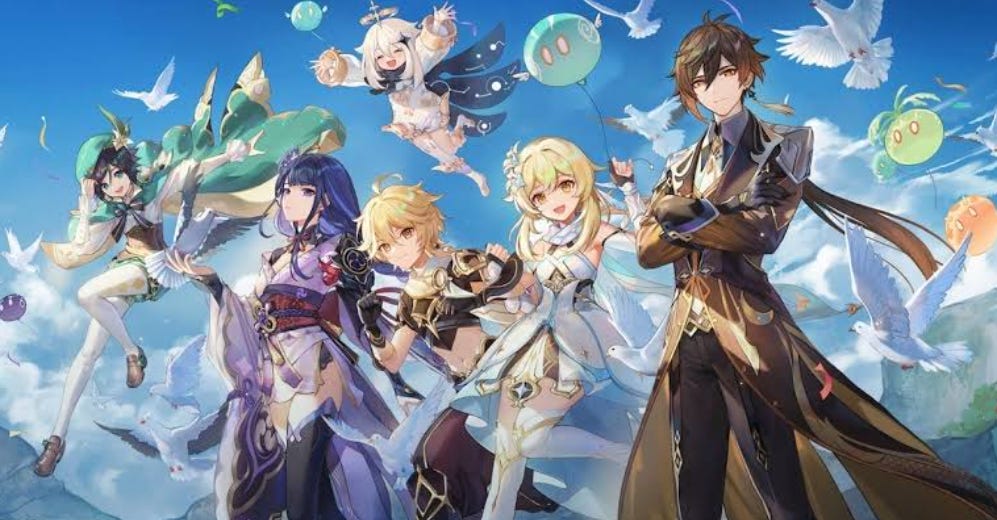
The Hurun Research Institute has ranked Chinese game developer miHoYo as the world’s 25th most valuable private company in its latest global rankings of private companies. Best known for Genshin Impact, miHoYo was valued at approximately $30 billion. The next highest ranked game company was Lilith Games, the studio behind Rise of Kingdoms and AFK Arena, which ranked 256th with an estimated valuation of $4.4 billion.
Why this matters: miHoYo’s valuation has increased rapidly in recent years. The company was valued at approximately $7.2 billion in 2023 before rising to around $23 billion in 2024 and reaching an estimated $30 billion in the latest ranking. The growth reflects the sustained global success of its live service portfolio, led by Genshin Impact alongside newer titles including Honkai: Star Rail and Zenless Zone Zero. However, it’s worth noting that only private companies founded after 2000 are included in the list, which does mean certain private companies like Valve are excluded.
Hero Esports CEO makes the case for esports going mainstream
Hero Esports Co-founder and CEO Danny Tang used an appearance at the Cannes Lions International Festival of Creativity to make the case that esports has become a mainstream audience platform for brands, investors, and media companies.
The appearance coincided with the release of The Esports Generation: Who They Are, and Why They Spend, a whitepaper published by Niko Partners, Hero Esports, and ESL FACEIT Group. The research is based on a May 2026 survey of 8,000 Gen Z esports fans and estimates that the global Gen Z esports audience may be as high as 400 million people. Download the whitepaper here.
Esports World Cup announces partnerships with Chinese digital platforms
The Esports World Cup 2026 has announced distribution partnerships with eight of China’s largest digital platforms ahead of this year’s tournament, significantly expanding access for Chinese audiences. The event, which will be held in Paris from July 6 to August 23, will be available across Douyin, Kuaishou, Bilibili, Huya, DouYu, Weibo, Hupu, and Tencent Video. Rather than offering identical coverage, each platform will leverage its core strengths. By combining livestreaming, short video, social media, community discussion, and video on demand, the Esports World Cup is maximizing its reach across different audience segments.
Why this matters: Douyin and Kuaishou will provide livestreams alongside short form content, including highlights, behind the scenes footage, and player interviews. Bilibili, Huya, and DouYu will focus on live match broadcasts, professional commentary, and supplementary esports programming for core gaming audiences. Weibo will serve as the tournament’s social media partner, delivering live news updates and driving fan engagement, while Hupu will provide community focused features such as match ratings and discussion forums. Tencent Video will host full match replays, allowing viewers to watch complete broadcasts on demand.
NetEase to shut down its livestreaming service CC Live
NetEase will shut down its game livestreaming platform CC Live on August 31, 2026, marking the end of one of China’s earliest dedicated game streaming services. In a June 30 announcement, the company said the closure follows adjustments to its product development and operating strategy. Effective immediately, CC Live has suspended downloads, virtual currency top ups, new user registrations, and onboarding of new streamers and guilds.
Why this matters: Originally launched as NetEase CC Voice in 2009, the platform primarily served as a promotional channel for NetEase’s game portfolio through exclusive streaming rights and official content. However, CC Live never emerged as a leading player in China’s livestreaming market, remaining significantly smaller than established competitors while occupying a niche centered on NetEase titles.
Link to original article (Chinese) →
Nintendo Switch to be discontinued in Europe after new battery regulations
Nintendo has announced that new EU battery regulations coming into effect in February 2027 will lead to product changes for its Switch family of consoles. The Nintendo Switch 2 will introduce a new SKU later this year with a replaceable battery, while it will discontinue the original Nintendo Switch in early 2027. The Nintendo Switch has sold over 40 million units in Europe, although less than 1 million were sold in the past year as the console turns 10 years old.
Why this matters: While not explicitly noted, it’s clear that Nintendo is sunsetting production on the Nintendo Switch due to the new regulations, age of the console, and declining sales, not to mention the rising costs of supporting older hardware. The company has yet to confirm discontinuation for other markets, but we note that Nintendo is only forecasting 2 million unit sales for the console this year, and given it has already had to raise the price of the console due to increased memory costs, it’s unlikely the firm will continue producing it globally by 2028.
NeoPulse to acquire controlling stake in Wemade
On July 30, Wemade announced that Chairman Park Kwan Ho signed a share purchase agreement to sell his entire stake in the company for approximately KRW 920.0 billion (around $657.1 million). The acquisition is led by Hong Kong based investment platform NeoPulse, which is wholly owned by Shengsong Investment and has business ties with Alibaba and major Chinese game companies. Upon completion of the transaction on October 30, NeoPulse will hold a 40.25% stake, becoming Wemade’s largest shareholder.
Why this matters: Wemade stated the transaction is based on a shared strategy to expand AI adoption in game development and accelerate growth in the Chinese market, while NeoPulse revealed plans to support global game development and broaden the commercial use of Wemade’s Mir intellectual property through partnerships with Chinese technology and gaming companies. Over the past year, WeMade successfully resolved its lengthy intellectual property dispute with Century Huatong, restoring its ability to monetize Legend of Mir licensing in China.
Link to original article (Korean) →
TapTap showcases 52 games at annual press conference
TapTap celebrated its 10th anniversary during the 2026 TapTap Games Showcase on July 2, presenting updates across 52 games during a 90-minute livestream for the Chinese audience. The event featured a broad mix of genres, including open world, action adventure, shooter, roguelike, strategy, simulation, puzzle, music, and indie games, alongside new AI development tools. Following the launch of the TapTap PC client in 2025, this year’s event featured a larger presence of premium PC and console titles.
Why this matters: The showcase reflected TapTap’s continued evolution from a mobile game discovery platform into a broader cross-platform ecosystem. Since its launch in 2016, the platform has differentiated itself through policies such as zero revenue sharing, avoiding mandatory channel SDK integration, and providing game testing and preregistration tools that allow developers to reach players more directly. Beyond publishing, TapTap introduced its first AI game creation platform, TapTap Maker, positioning the company as both a distribution platform and a game creation ecosystem.
Link to original article (Chinese) →
AI only delivers publicly available data. Don’t build your video game strategy without diving deeper.
Savvy subsidiary, Scopely, make undisclosed investment in Studio AuKnow
Savvy Games Group subsidiary, Scopely, have announced that they will be making an undisclosed investment in Tokyo-based game studio Studio AuKnow, which was founded last year by former UmaMusume: Pretty Derby director, Takuma Akitsu. The new studio is focused on creating original IPs that connect with players and become massive hits.
Why this matters: This marks a shift from Scopely’s usual modus operandi, who prefer to invest heavily in well known international IPs (As seen with Monopoly Go, and the acquisitions of Pokemon Go developers, Niantic, and Kitka Games, the makers of Stumble Guys). This suggests that Scopely have faith that the studio head Takuma Akitsu can utilize his experience working on Umamusume: Pretty Derby to create a new hit.
Link to original article (Japanese) →
China expands local game approval pilot to Hunan
China’s National Press and Publication Administration (NPPA) has approved Hunan Province as the latest pilot region for the localized administration of domestic online game approvals. Under the new framework, Chinese games developed and published by companies based in Hunan will undergo initial content review by the provincial publishing authority, using the same national review standards before progressing through the broader licensing process.
Why this matters: For game companies located in Hunan, the pilot is expected to streamline the submission process, shorten review timelines, and provide greater predictability around game launches. While final approvals will continue to follow national standards, shifting the initial review process to provincial authorities is intended to improve administrative efficiency. Hunan becomes the eighth province or municipality to participate in the localized review system.
Link to original article (Chinese) →
Events
Philippine Game Dev Expo (PGDX)
July 24-26, 2026
Manila, The Philippines
Speaker: Darang Candra
ChinaJoy
July 31-August 3, 2026
Shanghai, China
Attendee: Xiaofeng Zeng