

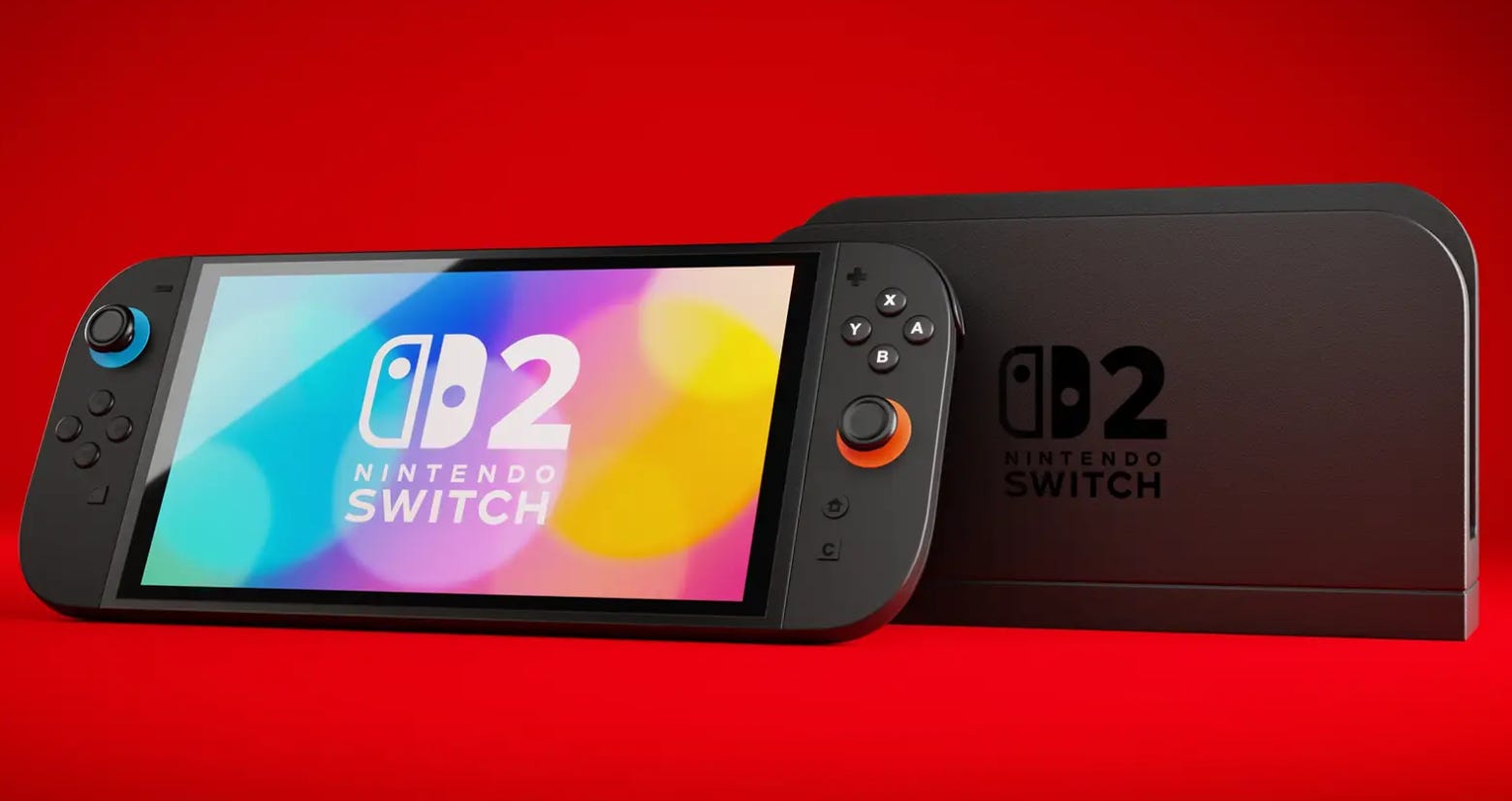
Nintendo’s latest earnings report states that the Nintendo Switch 2 has shipped 17.37 million units globally as of December 31, 2025, with 7 million units shipped during the holiday quarter. The positive results have allayed some investor fears that sales of the Switch 2 were weak during the last quarter of the year. The Switch 2 is Nintendo’s fastest selling console ever and Nintendo has maintained its forecast for the full fiscal year ending March 31, 2026. Nintendo President Shuntaro Furukawa said that memory price rises are not significantly impacting results during the financial year, but could impact profitability if the component costs remain high over the longer term.
Why this matters: Niko Partners was bullish on Switch 2’s first year, but we caution that long term success will depend on both first party software releases and external factors such as tariffs and memory prices. We currently expect Nintendo to increase the price of the Switch 2 in 2026 as a result of the latter. While there were concerns around holiday performance for the Switch 2, we note that sales in Asia were strong, with Japan seeing a 37% shipment increase in Q4 2025 compared to the Switch 1’s first holiday quarter. Concerns around weakness were primarily due to lower than expected shipments in North America where macroeconomic conditions, high demand at launch, and the lack of a major holiday release dampened sales somewhat. We currently forecast that Nintendo Switch 2 will surpass 50 million units sold by the end of 2027, in line with the original Switch.
Niko Partners at MLBB M7 World Championship: From Jakarta with Global Ambition - New Blog Post
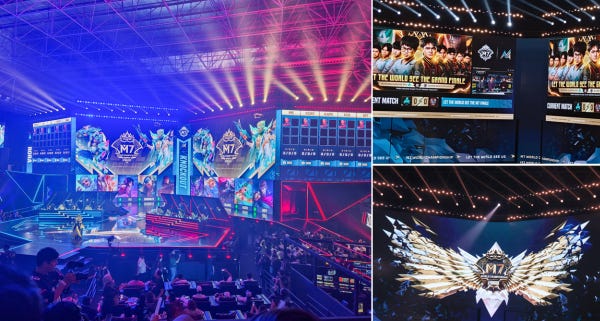
The seventh edition of the Mobile Legends: Bang Bang (MLBB) M-Series reached record-breaking viewership, making it the most-watched mobile esports event to date. The tournament also highlighted MLBB’s ongoing efforts to expand beyond its core Southeast Asian markets and grow its global presence. Niko Partners was on site to catch the action in full. Read our take of the event in our latest blog post
Chinese game companies back Generative AI firms to build out development tools
Daniel Ahmad, the Director of Research and Insights at Niko Partners, spoke to the South China Morning Post on how Chinese game companies are adopting generative AI tools across multiple stages of production including development, operations, marketing, publishing, and player engagement, as well as directly investing in AI companies. Recently public listing for AI companies Zhipu AI and MiniMax were backed by firms such as Tencent, Alibaba and miHoYo. 37 Interactive Entertainment has taken stakes in Zhipu AI, Moonshot AI, and Baichuan. AI is increasingly viewed as a catalyst to move the games industry beyond its recent period of stagnant growth, enabling larger and more complex games without proportional increases in staffing.
Why this matters: Chinese developers are seeking to revive growth and manage rising development costs for AAA and live service titles, where content scale and update cadence have expanded faster than headcount efficiency. “It is primarily being seen as a way to reduce development costs, speed up game development, expedite user acquisition and create new experiences,” Ahmad said, adding that AI adoption appeared higher in China and Asia’s game sector than in the US, based on player surveys and discussions with industry executives.
Vietnam GameVerse 2026 expands esports, industry programs as Vietnam links games to cultural export goals
On January 29, the Authority of Broadcasting and Electronic Information under the Ministry of Culture, Sports, and Tourism, together with VnExpress and Vietnam Game Development Alliance, announced Vietnam GameVerse 2026 in Hanoi. The program runs February to May, ending in Ho Chi Minh City, and adds ticketed attendance, an expanded expo, forums, and esports tournaments alongside Vietnam Game Awards and GameHub.
Why this matters: The expansion of GameVerse comes as the government of Vietnam frames the event as supporting cultural export and the cultural industries strategy. Recently, the government set a target of $1 billion in annual games industry revenue by 2030. In November 2025, the government issued a national strategy for developing cultural industries, identifying gaming as one of six key sectors.The event is also set to include the official Southeast Asian esports cup and domestic finals.
Link to original article (Vietnamese) →
Tencent launches Operations Pro League for Delta Force in China
Delta Force has announced the Operations Pro League, its first official professional esports league in mainland China, spanning Spring and Summer 2026 and culminating in a World Cup event. The league will feature 24 teams, including 18 fixed slot teams such as All Gamers, eStar, LGD Gaming, Bilibili Gaming, Wolves Esports, Nova Esports, Qing Jiu Club, and Weibo Gaming, with six additional teams to be selected through open qualifiers. The announcement builds on a strong 2025 performance for Delta Force in China. The title hosted multiple domestic tournaments throughout the year, culminating in two Delta Force Invitationals.
Why this matters: Delta Force recently surpassed 41 million DAUs in China, a scale that places it among the country’s largest live-service shooters. The game has also consistently ranked first on Douyin’s trending list, with daily views exceeding one billion. The launch of a structured 2026 esports league backed by major Chinese organizations shows that Delta Force is solidifying its foothold in China’s FPS and extraction shooter segment. Its rapid user growth and strong Douyin traction suggest the title may remain a major competitive force even as global publishers plan entries into the same genre.
37 Interactive outlines developments using Generative AI
37 Interactive Entertainment released a new Investor Relations Activity Record detailing its strategic response to structural shifts in the games industry, with a strong emphasis on GenAI integration, product pipeline depth, and talent restructuring. The company disclosed that it currently has more than 10 titles in development, concentrated primarily in SLG and casual genres. It also continues to focus on puzzle strategy games, particularly across match-3 and hybrid “match-2” categories. GenAI was positioned as a core pillar across publishing, development, and long-term strategy.
Why this matters: It’s no secret that Chinese game companies are embracing generative AI across their operations, with more than 60% of developers in the country doing so according to a recent survey. For 37 Interactive, AI is now used across 90% of its workflows. In user acquisition, 37 Interactive was among the earliest domestic publishers to deploy AI-driven ad buying, with automated placements now accounting for over 70% of total spend. AI penetration in art production has reached 65%, significantly reducing 2D and 3D asset costs.
Return to Silent Hill has larger debut in China than US
Return to Silent Hill, a new movie based on the popular horror video game IP owned by Konami, premiered at cinemas this week. In the US, the film opened to just $3.2 million, ranking seventh at the box office amid severe winter storms that disrupted theater attendance and intense competition from tentpole releases such as Avatar: Fire and Ash and Zootopia 2. In contrast, China emerged as the film’s clear standout market. Return to Silent Hill debuted at number one in China with an estimated $9.3-9.5 million, despite relatively limited screening allocations.
Why this matters: China accounted for roughly half of the film’s global opening weekend, contributing to an estimated $16 million across 37 international markets and a total global opening of approximately $19.3 million. The result is notable given that the underlying Silent Hill IP does not have a strong historical footprint in China compared with other global gaming franchises. China’s performance appears to be driven less by IP recognition and more by genre appeal.
Link to original article (Chinese) →
Niko consumer insights and business intelligence dives deeper than AI.
Arknights Endfield surpasses 30 million downloads but sees payment issue on day 1
Arknights: Endfield, the action RPG developed by the Chinese developer Hypergryph, has surpassed 30 million downloads globally according to the company. It is a spinoff of Hypergryph’s 2019 tower defense game Arknights. The game was released on January 22, 2026, for PlayStation 5, PC, and mobile devices. While reviews have generally been positive, with an average 8/10 review score, the game suffered from a payment bug on its first day. According to the developer, a payment system malfunction on its webshop and official game launcher led to PayPal making unauthorized transactions for players that had not purchased any in-game items.
Why this matters: In China, the game debuted at #1 on the iOS game download chart and reached #4 on the iOS game revenue chart in its first week. According to Niko Partners’ China Games & Livestreaming Tracker, it was the #4 most viewed title in its first week, reaching 29 million viewers. Hypergryph said the bug impacted 1,800 players who were charged a cumulative $80,000 via PayPal. The company disabled PayPal as a payment option, conducted a full investigation, and issued full refunds. While incidents like this highlight risks around D2C payment options for players, we do not expect this to have a negative impact on the sector.
Link to original article (Chinese) →
Union Budget 2026 backs AVGC creator labs across 15,000 schools, 500 colleges
India’s new Union Budget for 2026 proposes support for the Indian Institute of Creative Technologies to set up Animation, Visual Effects, Gaming, and Comics (AVGC) content creator labs in 15,000 secondary schools and 500 colleges. The plan emphasizes hands-on training for animation and game creation, alongside a $27.3 million (INR 2.5 billion) AVGC talent allocation and a government estimate of two million professionals needed by 2030.
Why this matters: The 2026 budget represents a step improvement over last year when it comes to funding for gaming related talent and represents an increased focus on video games after the government banned Real Money Gaming last year. India’s Game Developer Association of India (GDAI) estimates that with coordinated policy support, India’s games sector could train over 200,000 developers, support more than 1,500 studios and generate $10 billion in annual exports by 2035.
Pokémon sees backlash in China over alleged Yasukuni shrine event
Pokémon has come under scrutiny on Chinese social media following the announcement that a Pokémon card game event was planned at the Yasukuni Shrine area in Japan, a site widely viewed in China as a symbol of Japanese wartime militarism. The listing prompted accusations that the Japanese company was benefiting commercially from China while undermining Chinese historical sensitivities. The Yasukuni Shrine is highly contentious in China and other parts of East Asia because it commemorates Japan’s war dead including war criminals. The Pokémon Company has since issued an apology in both Chinese and Japanese.
Why this matters: The Pokémon IP is extremely popular in China across its video games, card game, media and merchandise, but the event has been viewed negatively and also comes at a time when relations between China and Japan have started to worsen. This is not the first time Pokémon has been drawn into Yasukuni-related controversy in East Asia. In 2019, South Korean social media users criticized Creatures Inc., a core Pokémon developer, after employees were alleged to have shared photos of themselves worshiping at the shrine. This once again underscores the need for strict oversight of brand usage!
Link to original article (Japanese) →
Events
WN Abu Dhabi
February 11-12, 2026
Abu Dhabi, UAE
Speaker: Bahaa Hamza
GDC Festival of Gaming
March 9-13, 2026
San Francisco, USA
Attendees: Lisa Hanson, Alexander Champlin
Contact us to set up a meeting →
