


Papergames has canceled development of Valko, a planned new romance option for Love and Deepspace, just eight days after the character’s announcement. Valko, who was scheduled to debut in Version 6.0 on July 9, would have been the sixth love interest in the game and the first new addition since Caleb was introduced in January 2025. The decision follows significant backlash from the game’s community. While there has been backlash to the character itself, many players argued that existing love interests had not received sufficient story and relationship updates, expressing concern that introducing another romance option would further dilute future content.
Why this matters: The announcement reportedly led to a wave of negative comments, a decline in followers across the game’s social media channels, and, in isolated incidents, offline protests targeting the developer. The controversy highlights the unique dynamics of the otome and character driven gacha market, where long term player engagement is built around sustained emotional investment. There has also been a disconnect between Chinese and global player communities with the former leading the backlash while the latter has been more open to the character.
Coda partners with Indonesia’s Ministry of Creative Economy to scale games ecosystem and global developer reach
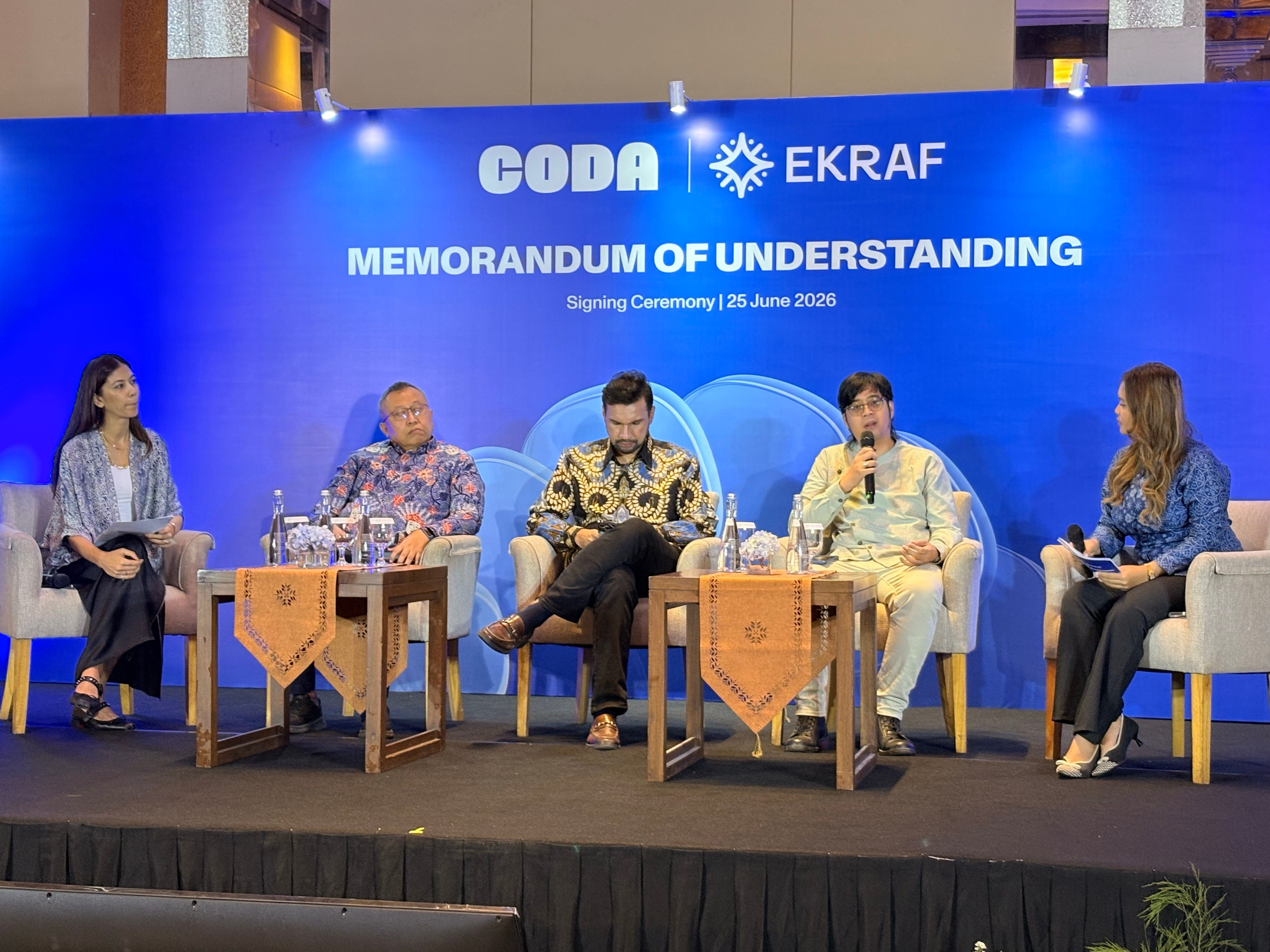
On June 25, Indonesia’s Ministry of Creative Economy signed an MoU with digital platform Coda, formalizing an ongoing partnership to strengthen the national gaming ecosystem and expand global market access for local developers. Niko’s Director for Southeast Asia and East Asia Research Darang Candra was also invited as a panelist in the MoU signing’s discussion session. The collaboration focuses on human resource development, as well as distribution, promotion, and digital payment systems to accelerate industry growth and improve international competitiveness.
Why this matters: Indonesia’s partnership with Coda highlights how governments are leveraging payment and distribution infrastructure partners to close the monetization gap for local developers, a key barrier to global competitiveness. This signals increasing ecosystem-level interventions in Southeast Asia to retain more value from fast-growing domestic gaming markets.
The Esports Generation: Who They Are, and Why They Spend - Free Whitepaper from Niko Partners x Hero Esports x ESL FACEIT Group
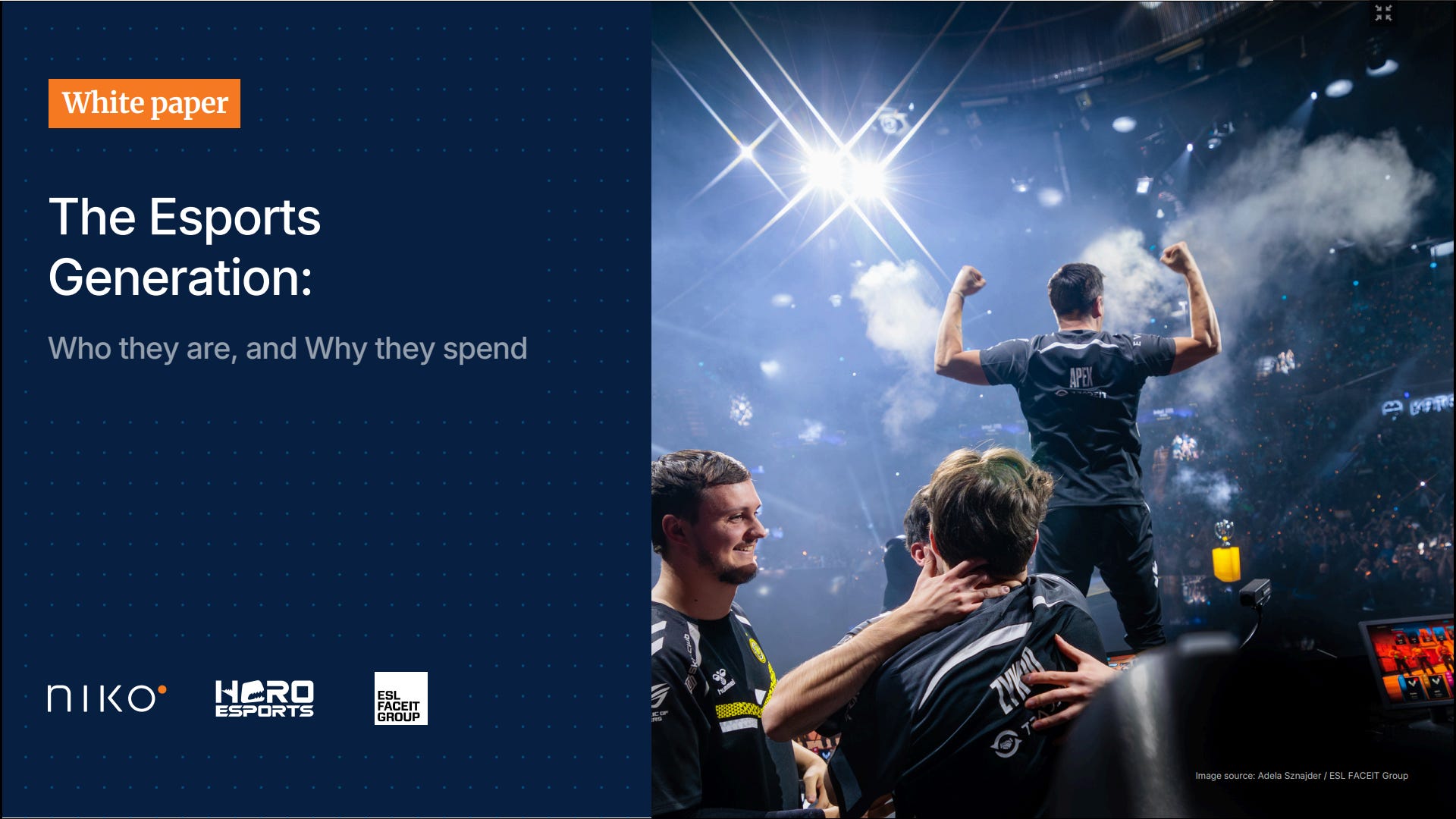
400 million Gen Z consumers regularly engage with esports and gaming content worldwide. What makes this audience so valuable to brands? Our research found that 85% of Gen Z esports fans notice brand partnerships in esports. Based on a survey of 8,000 Gen Z esports fans across multiple markets, this whitepaper offers one of the most comprehensive study at this fast-growing audience in recent years. Released in collaboration with Hero Esports and ESL FACEIT Group, this free whitepaper explores how Gen Z engages with esports, brands, and the experiences that drive loyalty.
Meccha Chameleon surpasses 10 million sales within three weeks of launch
Meccha Chameleon, a Japanese indie hide and seek PC game where players paint their character to blend into the environment, has reached 10 million sales on Steam in under three weeks following its launch on June 10, 2026. The title is described as one of the fastest-selling Steam releases in the past few years, having already surpassed 7 million copies by June 22 before adding another 3 million in just four days. The game’s rapid growth in popularity has been supported by frequent updates, with two major patches already released, and a third announced as the developer continues to iterate during peak visibility. This combination of strong viral adoption and active post-launch support has helped sustain player engagement at a scale.
Why this matters: This is an update of the game’s 5 million sales which we posted to Niko News last week. The rapid success of Meccha Chameleon underscores how simple, highly shareable indie gameplay concepts can achieve massive scale on PC platforms, highlighting the growing importance of virality (especially via game streamers and VTubers) and rapid live updates in sustaining breakout hits. Notably, the Steam reviews are very positive, yet “mixed” for those in Chinese language.
Link to original article (Japanese) →
GTA VI unavailable for pre-order in select countries, including Bahrain, Qatar, Kuwait and Russia.
The most hotly anticipated game of the year, Grand Theft Auto VI may be unavailable for purchase in some parts of the world. Following pre-orders going live on June 26th, 2026, users from select countries have found that the game is not available on certain digital storefronts. The countries are: China, Lebanon, Kuwait, Bahrain, Qatar, Russia, Chinese Taipei and Oman. No official statement has been made from Rockstar or Take-Two Interactive on the matter.
Why this matters: Notably, the game is listed for pre-order in Saudi Arabia, which is likely due to the introduction of a 21+ age rating that allows for mature games to be approved and following a partnership between Take-Two and AIC Interactive. China has never approved a GTA game and is not expected to, but players will no doubt download the game via the Hong Kong store. It’s unclear if the other countries will be able to pre-order at a later date.
Saudi Arabia targets Japanese anime, manga, and gaming IP to diversify its economy
Saudi Arabia is targeting Japanese anime, manga, and gaming IP as part of its economic diversification strategy, according to experts Douglas Montgomery and FUJIMURA Tetsu speaking at a June 2026 press conference in Tokyo. The Kingdom’s interest is driven by strong alignment across government, businesses, and consumers, with initiatives including a planned Dragon Ball theme park scheduled to open in 2029. Investment from Saudi entities such as Manga Productions is supporting anime development and creating opportunities for young and international animators.
Why this matters: Saudi Arabia’s investment in Japanese IP highlights growing MENA demand for global entertainment content and signals new funding sources for anime and game production pipelines. For Niko clients, this trend underscores increasing cross-regional collaboration opportunities and the expansion of IP-driven ecosystems beyond traditional Asia markets.
Vietnam to enforce fines for player-to-player virtual item trading from July 1
Vietnam will begin enforcing Decree 174/2026/NĐ-CP on July 1, imposing fines of $76-114 (VND 2-3 million) on players who buy or sell virtual items, virtual currency, or reward points with other players, while online game operators allowing such transactions may face fines of $2,282-3,043 (VND 60-80 million). The decree reinforces restrictions introduced under Decree 147/2024/NĐ-CP by shifting from prohibition to enforceable penalties, extending regulatory responsibility to both players and game operators.
Why this matters: The most important development is not the introduction of a new prohibition, but the addition of clear financial penalties that significantly increase regulatory enforcement risk. The change may reduce informal gray-market trading while encouraging monetization through publisher-controlled systems, making compliance and transparent virtual economy design increasingly important for companies operating in Vietnam.
Link to original article (Vietnamese) →
Indonesia deactivates 4.7 million underage accounts under new platform risk regulations
Minister of Communication and Digital of Indonesia, Meutya Hafid, reported that 4.7 million accounts belonging to users under 16 have been deactivated since restrictions on high-risk digital platforms were introduced on March 28, 2026. Major platforms affected include X, Bigo Live, Instagram, Facebook, Threads, TikTok, YouTube, and Roblox, with TikTok removing 4.1 million accounts and YouTube about 600,000.
Why this matters: The policy stems from Government Regulation No. 17 of 2025 (PP Tunas), which requires high-risk platforms to deactivate accounts belonging to users under 16 and submit risk-based self-assessment reports by June 6. This policy signals a shift toward platform-enforced age compliance in Southeast Asia, creating new operational risks and compliance costs for social and gaming platforms like Roblox.
Link to original article (Indonesian) →
Alibaba plans to sell its game segment for over $1 billion
Alibaba is reportedly exploring the sale of its games subsidiary Lingxi Games, according to Chinese media reports. The company is said to have approached multiple potential buyers, including 37 Interactive Entertainment, China Ruyi, Century Huatong, and Giant Network. Neither Alibaba nor the reported bidders have officially confirmed the discussions. Lingxi is best known for Three Kingdoms: Tactics, one of China’s highest grossing strategy games, which has consistently ranked among the country’s top iOS revenue generating titles since launching in 2019.
Why this matters: The reported sale aligns with Alibaba’s broader strategic refocus on artificial intelligence. In August 2025, Lingxi’s reporting structure was moved outside Alibaba’s entertainment division and placed under the group’s CFO, signaling a shift in internal priorities. More broadly, the reported discussions reflect an ongoing trend of major Chinese technology firms streamlining noncore businesses while concentrating investment on AI and other strategic growth areas.
Link to original article (Chinese) →
AI only delivers the tip of the iceberg. Niko delivers the depth and context you need with local expertise, global perspective.
Honor of Kings introduces community moderation and tougher penalties
Honor of Kings launched its S44 season on June 25, introducing a series of competitive integrity and player behavior updates aimed at improving the ranked experience. The headline feature is a new community moderation system that combines automated detection with player voting to deliver more accurate rulings on in-game violations. Tencent has also strengthened its ranked match enforcement. Players removed from matches for rule violations will now receive additional ranked point deductions, while teammates affected by the misconduct will receive increased point compensation.
Why this matters: The update follows an intensified anti cheating and account moderation campaign during the first half of 2026. The company suspended approximately 4.03 million accounts for severe violations related to inappropriate profile content and other community offenses, underscoring the scale of ongoing moderation across one of the world’s largest live service games. The introduction of player assisted moderation mirrors a broader industry trend in which developers supplement automated detection with community input to improve the accuracy and perceived fairness of enforcement.
Link to original article (Chinese) →
Chinese iOS developers file anti-trust complaint over Apple App Store fees
A group of 48 Chinese iOS developers have filed a complaint with China’s State Administration for Market Regulation, alleging that Apple is abusing its dominant position in the country’s mobile app ecosystem through unfair App Store commission policies. The complaint argues that Apple has failed to deliver on promises to offer Chinese developers the lowest available commission rates. In March, Apple reduced its standard App Store commission in China from 30% to 25% for paid apps and in app purchases, while lowering subscription renewal fees and commissions under its Small Business and Mini Apps Partner programs from 15% to 12%. However, the developer group contends these reductions do not go far enough.
Why this matters: A central argument is that Apple continues to prohibit alternative app marketplaces and third party payment systems on iOS in China. The developers claim that greater distribution and payment flexibility could reduce effective commission rates to as low as 5%, substantially lowering costs for local creators. Apple has already conceded on this point in other markets around the world, but not in China. Similar antitrust challenges have emerged in the European Union, the United States, Japan, and South Korea, where regulators have increasingly questioned platform restrictions on payments and app distribution.
Events
Philippine Game Dev Expo (PGDX)
July 24-26, 2026
Manila, The Philippines
Speaker: Darang Candra
ChinaJoy
July 31-August 3, 2026
Shanghai, China
Attendee: Xiaofeng Zeng
Contact us to set up a meeting →
