


Chinese developer S-Game has confirmed that Phantom Blade Zero has sold more than 4 million copies in its first 72 hours, while also reaching 834k concurrent players on Steam, making it one of the most successful game launches this year. S-Game and PlayStation have been heavily promoting the game in China, with marketing efforts including roadshows, brand partnerships and TV commercials. Like Black Myth: Wukong, the strong launch of Phantom Blade Zero is another example of a Chinese developer finding success in the AAA premium game space with a new IP.
Why this matters: Niko Partners estimates that over 2.5 million units were sold in China, with the title ranking at #3 by viewers on our China Games & Livestreaming Tracker in its first 3 days, behind Honor of Kings and League of Legends. Its domestic success also shows how China has developed as a serious market for AAA games with multiple premium titles becoming million sellers over the past few years. S-Game previously created Rainblood and Phantom Blade titles, which are set in the same universe as Phantom Blade Zero.
Sony launches new PlayStation Portal model in Japan
Sony has announced a Japan-exclusive version of its PlayStation Portal remote play device, scheduled to launch on December 10, 2026, for JPY 39,980 (approximately $253). The new model will be available in midnight black and feature additional internal storage intended to support future functionality, although Sony has not disclosed what these features will include. The device will be restricted to Japanese language settings and PlayStation Network accounts registered in Japan.
Why this matters: The new model will retain the existing Japanese retail price of JPY 39,980, effectively providing additional hardware capabilities at no extra cost compared with the current version. The launch follows Sony’s introduction of a lower priced, Japanese-language-only PS5 Digital Edition in November 2025, priced at JPY 55,000 ($350). Both consoles restrict language and account settings to Japan, allowing Sony to differentiate domestic pricing and features from international markets.
Tapping into the lucrative Southeast Asian video games market
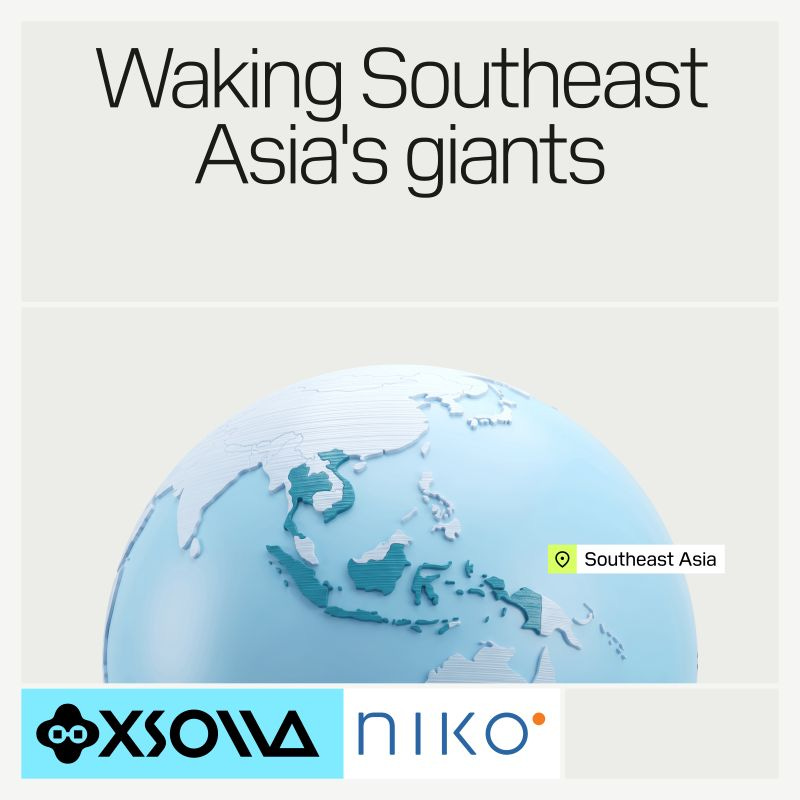
Southeast Asia is home to nearly 300 million gamers, with Indonesia, Thailand, and Vietnam accounting for 68.5% of the region’s video game spending. Out-of-app commerce is gaining momentum in the region, driven by lower prices, faster checkout experiences, and growing demand for alternative payment options.
Produced in collaboration with Xsolla, this white paper explores how Southeast Asian gamers discover and purchase games, and what publishers can do to unlock growth in this dynamic market.
Niko Partners goes to G-Star
Niko Partners is heading to Busan, Korea for G-Star on November 19-20. Niko’s Korea Analyst Shin Young Kim is thrilled to meeting new people, exploring new opportunities, and discussing your research needs on Asia & MENA video game market. See you there if you’re attending too!
Sony highlights Spider-Man cross-media synergies as film success boosts game sales and music streaming
On November 5, Sony said during its FY2026 Q2 earnings briefing that the success of Spider-Man: Brand New Day extended beyond theatrical performance and generated benefits across its games and music businesses. The film, which has surpassed $2.5 billion in worldwide box office revenue and ranks as the highest-grossing film in North America and the third highest globally, helped drive sales of related game titles to approximately double following its July release.
Why this matters: The film’s trickle-down effect shows how Sony’s trans-media strategy with engaging the broader entertainment ecosystem also benefits its video games business. Marvel’s Spider-Man 2, which launched in 2023, has sold nearly 20 million units to date and has become one of Sony’s most successful first party games.
Link to original article (Japanese) →
Minecraft China reaches 100m annual active players
Minecraft China has reached 100 million annual active players, highlighting the continued growth of the sandbox game nearly a decade after its domestic launch. The milestone was announced during the Minecraft China 2026 Creator Conference, held in Shanghai on October 29, 2026, alongside updates on the game’s creator economy, content partnerships and offline expansion.
Why this matters: Published by NetEase in China since 2017 across PC and mobile, Minecraft has developed a substantial domestic user generated content ecosystem. The platform now supports more than 400,000 creators, with developer revenue increasing 30% YoY. NetEase also announced several initiatives aimed at expanding Minecraft‘s presence beyond the game including a collaboration with Domino’s Pizza.
Link to original article (Chinese) →
PC production begins to move back to China
Major PC manufacturers including HP, Acer and ASUS have reportedly begun relocating some production from Thailand and Vietnam back to China. Dell is reportedly evaluating similar changes to improve production efficiency and reduce costs. The shift follows several years of supply chain diversification away from China, driven partly by US tariffs and geopolitical concerns. However, rising prices for memory, storage and other components are increasing manufacturing costs, making China’s established production infrastructure and cost competitive contract manufacturers more attractive.
Why this matters: TrendForce estimates that the proportion of global notebook production located outside China will decline from approximately 24% in 2025 to 21% in 2026, potentially falling below 20% in 2027. These projections suggest that cost pressures could partially reverse recent manufacturing diversification efforts. Greater reliance on Chinese manufacturing could help PC brands offset rising production costs, but may also increase exposure to trade restrictions and geopolitical risks.
Sony expands China Hero Project with new investment
Sony Interactive Entertainment has announced an expansion of its China Hero Project, committing $1 million in project investment to each game selected for its fourth phase. Sony also announced partnerships with gaming investment firm DENMU and global distribution company Solutions 2 GO (S2G), expanding the program’s access to financing, professional services and international distribution expertise. The company provided updates on several games supported through the program’s third phase.
Why this matters: The announcement was made during a press conference in Shanghai on November 3, 2026, as Sony continues to strengthen its support for Chinese game developers seeking to launch premium titles on PlayStation and international markets. Recruitment for the fourth phase is currently underway, with Sony seeking additional developers and projects. Since its establishment in 2016, the China Hero Project has selected 19 Chinese developed games, of which 11 have launched.
Link to original article (Chinese) →
No AI tool can deliver the deeper insights you can only get with Niko Partners.
Samsung creates new certification for internet cafes in China
Samsung Display is expanding its presence in China’s premium gaming monitor market through a new partnership with six monitor manufacturers to establish QD-OLED certified internet cafes. The initiative involves AOC, ASUS, HKC, MSI, TitanArmy and ViewSonic, marking the first reported collaboration between a display manufacturer and internet cafe operators to establish a certified store model. The initiative comes amid rapid growth in China’s internet cafe and esports hotel industry as PC gaming becomes more unaffordable at home.
Why this matters: According to the Internet Society of China, the number of establishments increased from 90,000 in 2023 to 104,000 in 2024 and 122,000 in 2025, with projections of 133,000 in 2026. This represents approximately 48% growth over three years, reflecting continued demand for shared gaming facilities and access to high performance hardware. Competitor LG Display is also reportedly expanding its presence in the segment through partnerships involving AntGamer’s internet cafe business.
VNGGames launches Indonesia Village server and local event for Play Together
VNGGames launched the Indonesia Village server for social game Play Together on November 5. The event is locally themed and called “Indonesia Village Guide Club”. The update brings Indonesian themed content to Kaia Island while retaining the game’s core social simulation activities, including fishing, farming, home decoration, pet care, and community building. According to VNGGames Jakarta Studio, the Indonesia Village content was created specifically for Indonesian players as part of the company’s effort to strengthen the local gaming community.
Why this matters: This launch highlights the growing importance of deep localization strategies in Southeast Asia, where publishers are increasingly creating market specific content and community features to improve player engagement and retention. An additional account migration initiative also demonstrates how regional operators are working to transition players into localized publishing ecosystems while preserving progression and social connections.
Link to original article (Indonesian) →
Nexon enters strongest emergency management phase since founding after halting eight projects
Nexon is reportedly implementing its strongest emergency management measures since its 1994 founding, with next year’s business strategy including more restructuring targets than the 8 businesses and projects it halted or discontinued this year. Industry sources said the company accelerated planning amid concerns over a declining gaming population and growing competition from OTT entertainment services. Nexon, which has led South Korea’s game industry by revenue and operating profit since 2008, risks losing its top position to Krafton as growth from established IP weakens. The company is also reportedly planning stricter cost controls next year.
Why this matters: Nexon’s restructuring highlights growing pressure on major game publishers to prioritize profitability and reduce investment in underperforming projects as player growth slows and competition for entertainment spending increases. Nexon has already ended a number of projects including the sequel to KartRider ended service last October, while Dungeon Fighter and The First Descendant have seen declining popularity, contributing to the cancellation of projects including Project EL and Project Everett, as well as the closure of subsidiary Buttons, into which Nexon had invested approximately KRW 52 billion ($38.8 million).
Link to original article (Korean) →
TOMY COMPANY launches ENJOYN GAMES indie publishing label with three Steam titles
Japanese toy company TOMY COMPANY, LTD. announced the launch of ENJOYN GAMES on November 4, a new indie game publishing brand that will begin releasing titles on Steam sequentially from November 2026. The label’s initial lineup includes Werewolf Burger which combines cooperative burger building with hidden-role gameplay, while Little Cheese Works has players cooperate as mice transporting cheese while avoiding a cat, and Sloppy Forgeries challenges players to recreate famous artworks under time constraints.
Why this matters: TOMY COMPANY’s entry into indie game publishing reflects a broader trend of established Japanese entertainment companies expanding beyond traditional toy and licensing businesses into digital game publishing, with the company’s entrance into video games seen after the recent announcements from Sanrio, Toei, and Parco. TOMY became known for creating popular toys like the B-29 friction toy and luck-based game Pop-up Pirate.
Link to original article (Japanese) →
Moonshot AI launches Kimi game development solution
Chinese AI developer Moonshot AI has introduced a game development solution built around its Kimi K3.1 model series, Kimi Code and Kimi Work agents, alongside integrations with Unity, Unreal Engine and Blender. The offering aims to help game studios accelerate prototyping, streamline production workflows and incorporate player feedback into ongoing development. According to Moonshot AI, the solution enables development teams to create playable prototypes and evaluate multiple gameplay concepts within shorter development cycles.
Why this matters: Rather than limiting AI assistance to generating text, code or visual assets, Kimi is designed to interact directly with professional development tools, modify existing projects and produce editable files alongside records of its actions. This approach aims to reduce the manual work required to integrate AI generated outputs into production pipelines while allowing developers to review and refine the results.
Events
G-Star
November 19-21, 2026
Busan, South Korea
Attendee: Shin Young Kim