

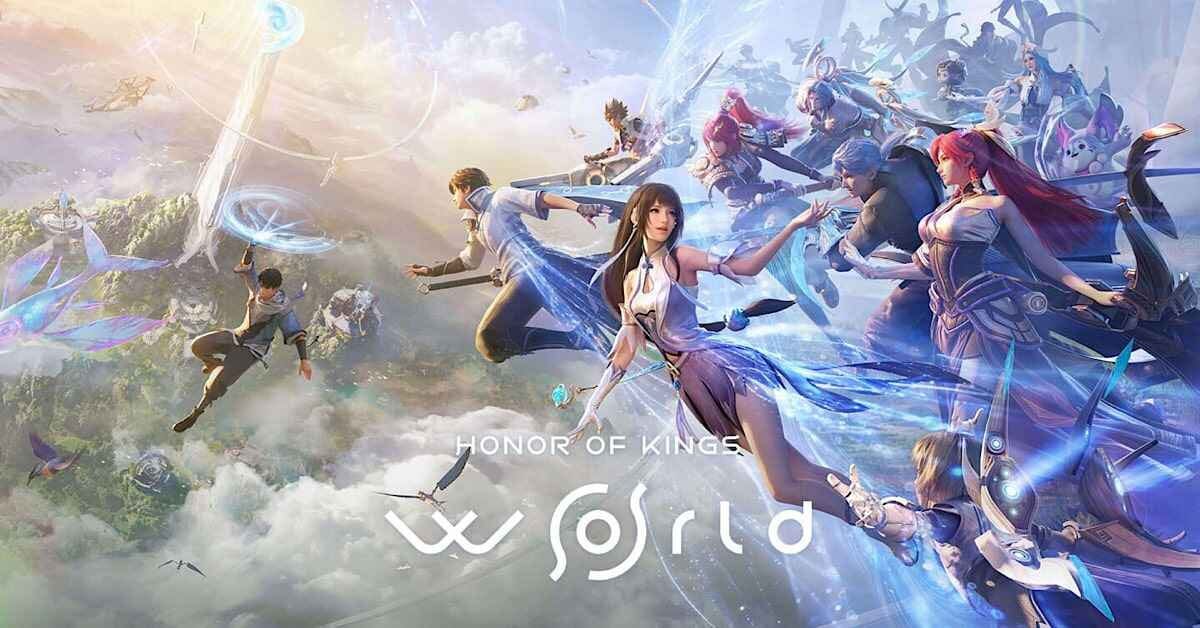
Tencent launched the open beta for Honor of Kings: World in China on April 10, marking a major expansion of its flagship Honor of Kings IP into the open world action RPG genre. The game focuses on deepening narrative engagement, bringing established characters into a more immersive story driven format. Early player feedback has highlighted strong reception to character storytelling and world building. Notably, the game adopts a monetization model that avoids selling characters or power progression, instead focusing on cosmetic purchases.
Why this matters: Honor of Kings: World represents Tencent’s strategic effort to extend a mature, high saturation IP into a new growth curve. As traditional MOBA engagement stabilizes and gacha-driven monetization faces increasing pressure, open world formats offer an opportunity to capture additional player time and deepen emotional engagement. According to our China Games & Livestreaming Tracker, the title was the #4 most viewed game across livestreaming platforms in its first week.
Link to original article (Chinese) →
How Evergreen Games are Reshaping Publisher Earnings, Metrics, and Success - New Niko Partners Blog Post

Niko Partners reviewed the recent earnings reports of publicly traded game publishers with titles included in the list of evergreen games that are the basis of our new white paper, The Impact of Evergreen Games on the Global Market.
After that review, we wrote an article that connects the dots between the importance of the titles mentioned in company earnings reports and the information Niko conveys in the white paper about the evolution of evergreen games. The post is linked below.
As the video game industry surpassed $190 billion in spending across game software and services last year, it’s no secret that evergreen games, aka forever games, have contributed to that high value. A natural evolution of Games as a Service, evergreen games are built around exceptional replayability with no fixed endpoint, allowing players to stay engaged for months or years.
Niko Partners at Vietnam GameVerse
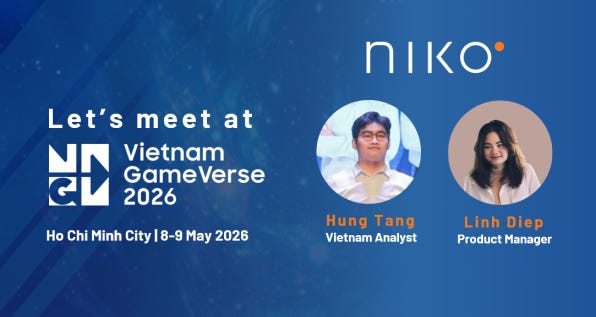
Niko’s Vietnam Analyst, Hung Tang, and Product Manager, Linh Diep will be heading to Vietnam GameVerse on May 8-9 in Ho Chi Minh City. We’re excited to be on the ground in Vietnam and see firsthand how the country is emerging as the next video games hub in Southeat Asia. Let’s connect if you’re going too!
Phantom Blade Zero developer rejects GenAI usage
S-Game confirmed that Phantom Blade Zero is in the final stages of development ahead of its planned September 9, 2026 release on PS5 and PC. Alongside the update, the studio publicly stated it will not use generative AI in the creation of visual content, emphasizing that all assets in the game are produced by human artists. While many studios are leveraging AI to improve efficiency and reduce costs, S-Game’s stance highlights a deliberate positioning around creative authenticity and artistic integrity. The studio emphasized that AI driven visual tools could compromise original artistic intent, reinforcing its commitment to traditional craftsmanship.
Why this matters: The decision comes amid increasing adoption of AI tools across the global games industry, particularly in areas such as art production, asset generation, and development pipelines. This position is in contrast to most studios in China which are increasingly integrating AI across workflows, from concept art to QA, in order to scale output and improve margins. The statement does however align with a growing cohort of smaller global game developers who are rejecting AI outright given rising backlash from players over quality and moral issues associated with the technology.
New livestreaming regulations impact tipping for minors
The Cyberspace Administration of China has introduced updated regulations governing live streaming monetization, implementing a tiered system for tipping by minors. The new rules prohibit tipping for users under age eight, require parental consent for users aged eight to 16, and mandate either guardian approval or proof of income for users above 16. The updated framework also introduces stricter compliance requirements for platforms, including mandatory disclosure of tipping rules, daily and per transaction spending caps, and prompts for users to set limits during initial transactions.
Why this matters: This marks a revision to the 2022 policy that imposed a blanket ban on tipping by all minors, reflecting a more nuanced regulatory approach balancing consumer protection with platform monetization. Tipping and virtual gifting are key monetization channels for game related content on platforms such as Douyin and Huya. Stricter controls on minor spending may reduce short term revenue from younger users but improve long term sustainability by addressing regulatory and social concerns.
Japanese media link Prince Holding Group to newly formed game studios in Japan
Japanese media investigations reported that Prince Holding Group, a Cambodia‑based conglomerate sanctioned by the U.S. and U.K. and described as one of Asia’s largest criminal organizations, established two game development companies in Japan in 2025. The firms, Soraen (founded April 2025 in Yokohama) and Kadea (founded May 2025 in Tokyo), were reportedly positioned as fast‑turnaround game developers but may have been intended to generate revenue, collect personal data, and recruit engineers for technology‑driven fraud operations. Corporate records show both companies were led by executives later indicted in Chinese Taipei in March 2026 on charges including money laundering.
Why this matters: The unique case highlights how games industry employees could be unwillingly recruited into a company that is essentially a front for criminal organizations. For Japan’s regulators, it underscores the need for deeper due diligence on studio ownership, hiring pipelines, and data handling as overseas investment in the country increases.
Link to original article (Japanese) →
Qualcomm and NetEase expand Windows on ARM gaming
Qualcomm is accelerating its push into PC gaming through its Snapdragon X2 Elite processors, partnering with NetEase to adapt 25 titles for ARM based Windows devices. Supported games include Marvel Rivals, Naraka: Bladepoint, FragPunk, Once Human, Sky Children of the Light, and Where Winds Meet. The Snapdragon X platform, built on ARM64 architecture, is positioned primarily around power efficiency and productivity, but Qualcomm is now expanding its gaming capabilities. Pre-launch messaging highlighted support for over 2,400 games, though many rely on compatibility layers such as Microsoft’s Prism emulation rather than native ARM optimization.
Why this matters: The NetEase partnership suggests a shift toward deeper ecosystem support, potentially including native adaptation to improve performance and reduce friction.While ARM based systems are not yet positioned to replace high end x86 gaming rigs, they are increasingly capable of running mainstream and less demanding titles. This positions them as viable entry level or secondary gaming devices, particularly as hardware costs rise due to memory and component shortages.
LINE Games adopts co‑CEO structure to accelerate global and multi‑title expansion
LINE Games has appointed Jo Dong‑hyun, the company’s existing CEO, and former CFO and CSO Bae Young‑jin as co‑CEOs, marking Bae’s return to management after three years and formalizing a dual‑leadership structure aimed at strengthening global competitiveness. The company said the new leadership will build on recent cost‑cutting and operational efficiency efforts by shifting toward more aggressive game development and overseas expansion to improve performance. Going forward, the company plans to accelerate a multi‑title strategy, increase the share of PC games targeting global markets, and push international launches of key mobile and PC titles.
Why this matters: LINE Games’ move to a co‑CEO structure highlights a broader industry trend among Asian publishers to pair financial discipline with development leadership as they pivot back to growth. In FY 2025, Line Games recorded revenue of KRW 33.5 billion and an operating loss of KRW 14.9 billion, with management citing the lack of new releases as a key factor, making upcoming titles critical to a return to profitability.
Link to original article (Korean) →
Niko delivers the ‘why-behind-the-what’ that AI tools cannot.
Destiny: Rising overhaul signals shift away from aggressive monetization
NetEase and Bungie have released a major overhaul update for Destiny: Rising, with players dubbing the changes “2.0” due to the scale of system redesigns. The title, launched globally on August 28, 2025 and in China on October 16, initially attracted attention for faithfully adapting the Destiny IP’s sci fi world design and exploration gameplay, but struggled to sustain monetization momentum post launch. The update directly addresses the game’s most controversial monetization systems.
Why this matters: Gacha-based character acquisition, previously the only method, now includes alternative pathways for unlocking characters, while the Pinnacle Energy system, which limited daily gameplay activity, has been removed entirely. These changes reflect a shift toward reducing friction and improving player retention, particularly among core audiences. The overhaul suggests a broader industry learning, where successful AAA mobile adaptations must align more closely with original gameplay ecosystems rather than relying on standard mobile monetization templates.
Jagex targets APAC expansion with Runescape: Dragonwilds
Jagex has announced plans to launch RuneScape: Dragonwilds in the Asia Pacific region later in 2026, marking what the company describes as its most significant international expansion to date. The rollout will include full localization in Simplified Chinese, Japanese, and Korean, following the title’s early access debut on Steam in April 2025 and its expansion into Latin America in September.
Why this matters: Dragonwilds is designed to align with regional preferences, combining survival crafting mechanics with cooperative gameplay and deep progression systems, a format that has demonstrated strong traction in Asia.The localization effort goes beyond language translation, signaling intent to adapt the experience for local audiences and improve market fit. This is particularly critical in APAC markets where cultural nuance, monetization expectations, and gameplay preferences can significantly impact performance.
Sanrio and Toei announce dedicated gaming brands
Two major Japanese entertainment companies, Sanrio and Toei, have announced strategic entries into the video games sector through the launch of dedicated gaming labels. Sanrio has established Sanrio Games, a self-publishing division. The company plans to release 10 titles over the next three years, supported by an investment of approximately ¥10 billion ($62.9 million) across development and marketing. In parallel, Toei has launched Toei Games as a new business unit focused on original IP and game development.
Why this matters: Both moves reflect a broader industry trend where IP owners are seeking greater control over value creation by internalizing development and publishing. Games offer higher margin monetization opportunities compared to traditional licensing. While Sanrio is likely to capitalize on globally recognized IP such as Hello Kitty, Toei’s focus on new IP introduces additional creative risk but also long term franchise potential.
Events
Vietnam GameVerse 2026
May 8-9, 2026
Ho Chi Minh City, Vietnam
Attendees: Linh Diep, Hung Tang
GamesBeat Summit
May 18-19, 2026
Los Angeles, USA
Speaker: Lisa Hanson
Attendee: Alexander Champlin