

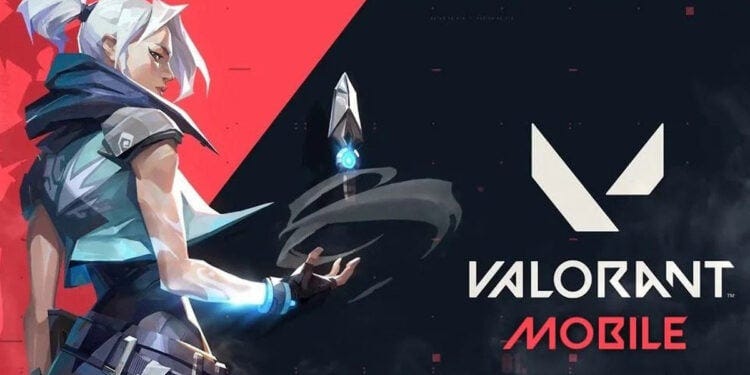
Tencent stated that Valorant Mobile has become the largest mobile game launch of the year in China, establishing itself as one of the company’s flagship titles for 2025. According to Tencent, the game had the highest first month DAU and revenue of any mobile game launched in 2025. Co-developed by Riot Games and Tencent Lightspeed, the mobile version builds on the strong momentum of the PC title launched in China in 2023. Tencent confirmed that the combined monthly active users for Valorant (PC) and Valorant Mobile have already exceeded 50 million in China, marking one of the fastest cross-platform user expansions for any game.
Why this matters: Valorant Mobile, which is a standalone game from the PC version, has been able to establish itself in a crowded mobile shooter category, which is also dominated by other Tencent games. The title has also maintained strong commercial performance, ranking among the top 30 iOS games by revenue year-to-date, with NetEase’s Where Winds Meet as the only other 2025 newcomer in the top 30. The success of Valorant Mobile highlights China’s appetite for mobile-first tactical shooters and the continued shift of PC franchises toward cross-platform ecosystems to grow DAU and monetization durability.
Rising tensions between China and Japan could impact video game approvals
Geopolitical tensions between China and Japan have sharply intensified following Japanese Prime Minister Sanae Takaichi’s recent comments suggesting Tokyo could intervene militarily should Beijing move toward reunification with Taiwan. China’s foreign ministry has issued strong objections, reiterating its long-standing position that any country maintaining diplomatic ties with Beijing must not officially recognize Taiwan. The dispute has already begun to spill over into economic and cultural domains. China issued travel advisories that led to multiple flight cancellations to Japan, suspended imports of Japanese seafood, and halted approvals for new Japanese films.
Why this matters: While there has been no indication so far that China’s National Press and Publication Administration (NPPA) will extend retaliatory measures to video games, the sector’s exposure is significant. Japan is the single largest source of import game approvals in China, accounting for roughly 30% of all licensed foreign titles over the past two years. At present, no Japanese games have been suspended, delayed, or subjected to public boycotts in China. However, past precedent shows that diplomatic disputes can quickly reshape media and entertainment access. Korean games, for example, faced a multi-year approval freeze during the 2017-2023 THAAD dispute.
Niko Partners goes to GamingCon Bharat 2025
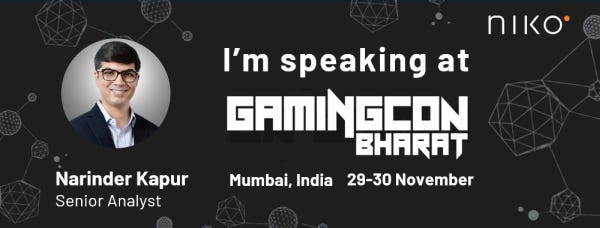
Niko Partners Senior Analyst Narinder Kapur is thrilled to be part of GamingCon Bharat 2025, taking place in Mumbai on November 29–30. Narinder will moderate the panel “Funding and Monetization in the India Opportunity,” discussing how investors evaluate the gaming sector and what they seek from game developers. The session brings together speakers from PlaySuper, Lumikai Fund, The Helium Wars, Chimera Venture Capital, and Mixi Global Investments.
Societal Impact of Mobile Legends: Bang Bang in Malaysia - New Niko Partners Bulletin with MOONTON Games
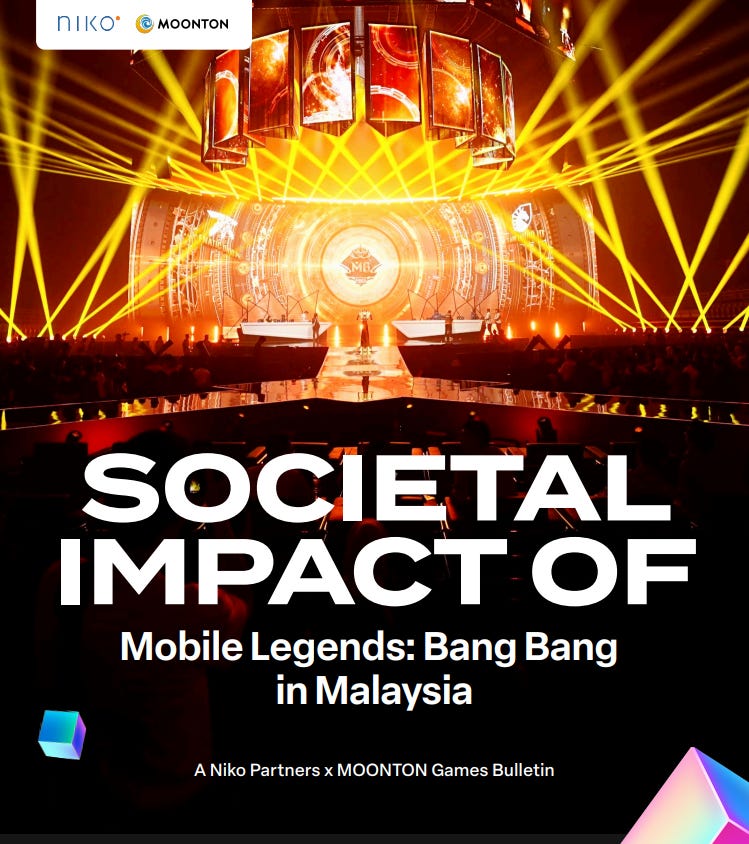
Malaysia’s gaming scene continues to thrive, with more than half the country’s current population are active gamers. One of the most-played mobile games in Malaysia is Mobile Legends: Bang Bang (MLBB) and the game has evolved to more than just a casual play. MLBB has become an entertainment platform and part of the youth culture. Niko Partners and MOONTON Games team up to explore the wider societal impact of MLBB and MLBB Esports, particularly how gaming influencing ambitions, habits, and overall well-being of Malaysian gamers and esports community.
Where Winds Meet off to notable start outside China
NetEase’s open-world Wuxia RPG Where Winds Meet reached 2 million players within the first 24 hours of its global launch, following 10 million pre-registrations. The title, developed by NetEase’s Everstone Studio, has quickly gained traction across overseas markets, achieving a peak of 250,000 concurrent users on Steam shortly after release. The game initially launched on PC in China in December 2024 and on mobile in January 2025, with the global rollout focusing on PC and console. The F2P game is set during the Five Dynasties and Ten Kingdoms period, promising over 100 hours of narrative-driven content.
Why this matters: NetEase is positioning the title as part of its strategic shift toward high-fidelity, cross-platform, F2P experiences with no pay-to-win systems, with this driving initial interest in the game. Interest was also driven by the recent success of games like Black Myth: Wukong, which have made traditional and mythological Chinese settings more appealing to overseas players. While reception is generally positive, some criticism has emerged around the traditional MMORPG gameplay, UI, mobile first controls and interface complexity, especially on consoles. If the game succeeds commercially, it will be a proof of concept for F2P AAA games without aggressive pay to win or gacha monetization mechanics. Niko CEO Lisa Hanson did an interview with CGTN Europe about the rising popularity of Where Winds Meet.
Beijing’s Haidian District introduces favorable policies for video games, esports and AI
Beijing’s Haidian District has announced three new “AI + Culture” industrial policies and a dedicated nine-point framework aimed at driving high-quality growth across game development, esports events, and industry clustering. The framework includes substantial financial incentives, with video games and related ecosystem projects eligible for up to RMB 40 million in support. The measures introduce targeted funding across game development, successful game launches, AI & technical research integration, establishing industry clusters, and esports.
Why this matters: Beijing’s Haidian District hosts offices and studios for a number of game related companies including Tencent, NetEase, Perfect World and ByteDance. The new policies are similar to others introduced at the local government level across the country that provide subsidies and other financial incentives for high quality video game industry projects. Game developers for example could earn up to 30% of their R&D investment back, Industrial parks that create games industry clusters could receive up to RMB 40 million, and new esports stadiums could receive an up to RMB 20 million subsidy. Additional support is also being offered in the form of a growth fund and service platform that offers regulatory guidance, support and recruitment services.
Link to original article (Chinese) →
Tencent completes investment in Ubisoft’s Vantage Studios
Ubisoft has confirmed that Tencent has completed its €1.16 billion ($1.25 billion) cash investment in Vantage Studios, securing a 26.32% stake in the newly created subsidiary focused on Assassin’s Creed, Far Cry, and Rainbow Six. First announced in March, Vantage officially began operations on October 1st in France under co-CEOs Charlie Guillemot and Christophe Derennes. The strategic spin-off is designed to centralize long-term franchise building, spanning narrative-driven single-player titles, expanded live-service roadmaps, multiplayer functionality, and regular content updates supported by Ubisoft’s proprietary technology stack.
Why this matters: Tencent’s minority investment positions it as a key operational partner, leveraging its distribution channels, publishing infrastructure, and deep understanding of China’s regulatory and platform ecosystem. This includes opportunities for mobile adaptations, cross-platform expansions, community development, and alignment with China’s shifting content guidelines. For Ubisoft, the creation of Vantage effectively de-risks investment in evergreen franchises by establishing a dedicated production and innovation hub backed by Tencent’s scale.
Explore NikoIQ – our powerful online intelligence platform designed to give you full access to Niko Partners’ entire knowledge base. It’s your gateway to the most trusted source for insights on Asia & MENA video games markets.
Saudi Arabia’s Public Investment Fund running low on cash according to NYT
A new investigation from The New York Times reports that Saudi Arabia’s Public Investment Fund (PIF), owns Savvy Games Group and notable stakes in multiple game companies including Nintendo and Take Two, is experiencing liquidity pressure that may limit its ability to make new large-scale investments. The report notes that PIF’s joint takeover bid for Electronic Arts in autumn 2025 was its largest offer that season, and that while the PIF maintains over $1 trillion in assets, a significant share is reportedly locked in illiquid, hard-to-value holdings with limited near-term exit options.
Why this matters: No video game or esports investments were cited in the report as distressed projects, with the investigation focusing on infrastructure projects such as Neom and a luxury resort portfolio as the main culprits. External partners have been told that the fund is unable to expand investments without first stabilizing these struggling projects, although the PIF has publicly denied any mandate to stop new investments first. The PIF and Savvy have the most active investor in the video game industry over the past few years and this development introduces some uncertainty around continued expansion. However, given Saudi Arabia’s Vision 2030 targets and the central role of gaming in its diversification strategy, a full strategic pullback remains unlikely.
Nintendo Store opens in Thailand, major milestone for the Local Gaming Industry
Nintendo has officially announced the establishment of its Thai subsidiary, NINTENDO (THAILAND) CO., LTD., on November 17, 2025, marking a significant step in strengthening its business presence in Thailand. The move reflects Nintendo’s commitment to expanding its operations in the country following key initiatives such as appointing Synnex as the distributor for Nintendo Switch 2, opening the Nintendo Authorized Store at Siam Paragon, and launching the Thai currency Nintendo eShop. Nintendo officially launched its Nintendo Switch 2 console in the country on June 26, 2025, less than one month after the global launch.
Why this matters: Nintendo has taken a proactive approach to increasing market share in Southeast Asia that goes beyond hardware partnerships and distribution. The company has launched Nintendo eShop and Online services across the region and also set up a Singapore subsidiary this September to accelerate its expansion in Southeast Asia. With an official local branch now in place, Thai gamers can expect more localized marketing activities, potential esports events, new game launches, and increased support for Thai language content in the future.
Events
GamingCon Bharat
Mumbai, India
November 29-30, 2025
Speaker: Narinder Kapur
CII Big Picture Summit 2025
Mumbai, India
December 1-2, 2025
Speaker: Narinder Kapur